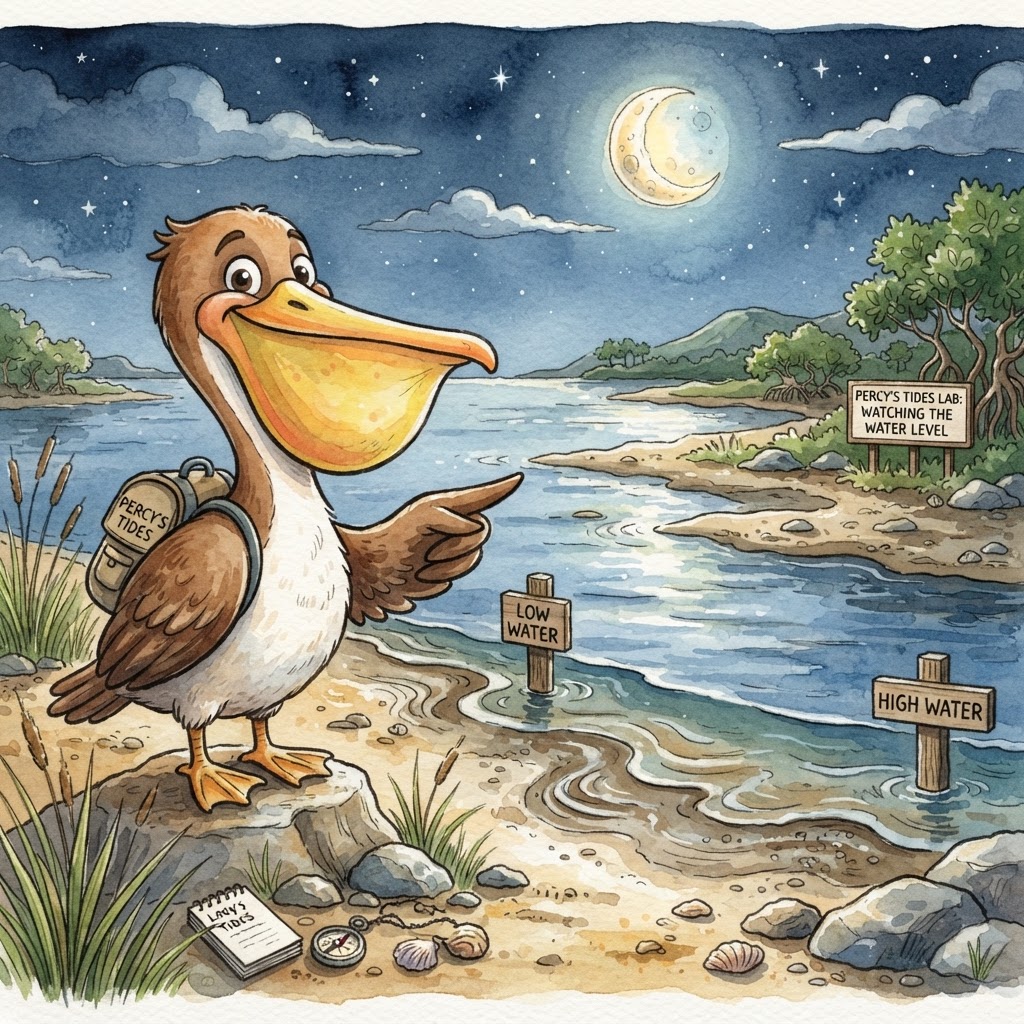
"Tides are caused by the moon and the sun pulling on the ocean. The moon's gravity pulls water toward it, creating a bulge. As the Earth rotates, the bulge moves, and the water rises and falls. Twice a day, the water comes in (high tide) and goes out (low tide)."
What Causes Tides?
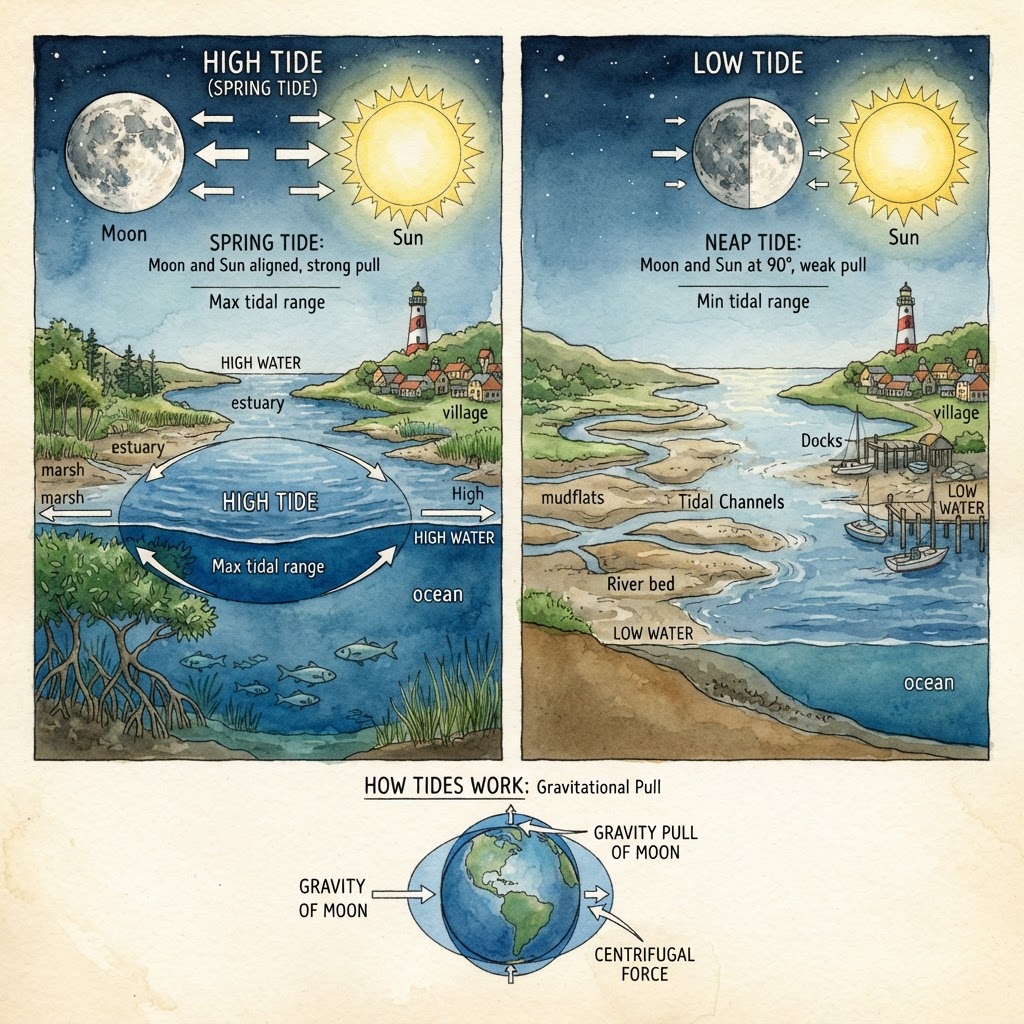
Tides are the periodic rise and fall of sea level caused by the gravitational pull of the moon and the sun on the Earth's oceans. The moon, being much closer to Earth than the sun, has the dominant effect. The moon's gravity pulls water toward it, creating a bulge on the side of Earth facing the moon. A second bulge forms on the opposite side (due to centrifugal force). As Earth rotates, these bulges move around the planet, causing the water level to rise (high tide) and fall (low tide) at each location. Most coastal areas experience two high tides and two low tides each day (a 'semidiurnal' tide). The sun also affects tides: when the sun and moon are aligned (new and full moons), their gravity combines, creating larger tides called 'spring tides.' When they're at right angles (quarter moons), the tides are smaller, called 'neap tides.' The Indian River Lagoon, connected to the Atlantic Ocean through inlets, experiences tides — but they're different from the open coast.