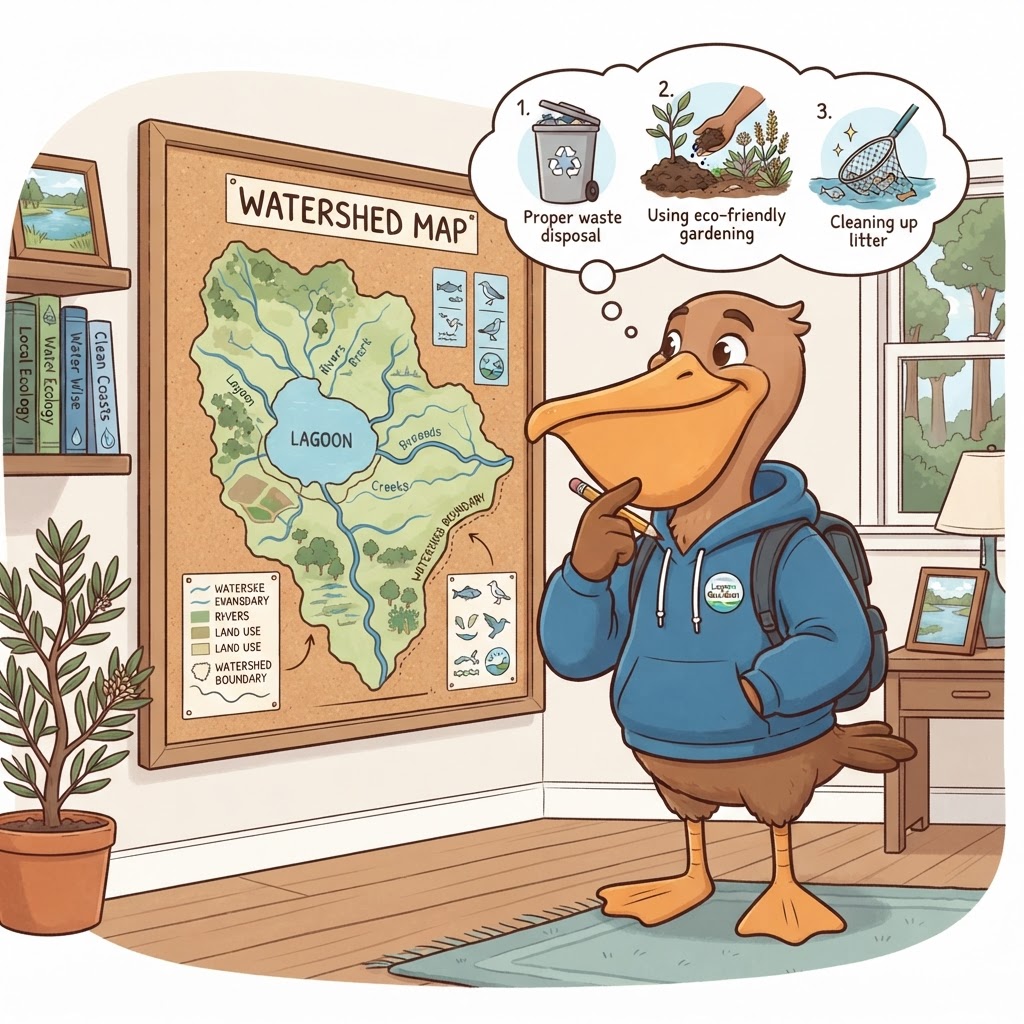
"Every person who lives in the Indian River Lagoon watershed — roughly 1.5 million people — is connected to the lagoon through the water cycle. When rain falls on your yard, it picks up fertilizer, pet waste, automotive fluids, and lawn chemicals. That water flows into storm drains, into canals, and ultimately into the lagoon. Everything you put on your lawn, everything you pour down your drain, everything you throw away — it all has a chance of ending up in the water. Sustainable living isn't about being perfect. It's about understanding those connections and making better choices where you can."
Why Your Daily Choices Affect the Lagoon
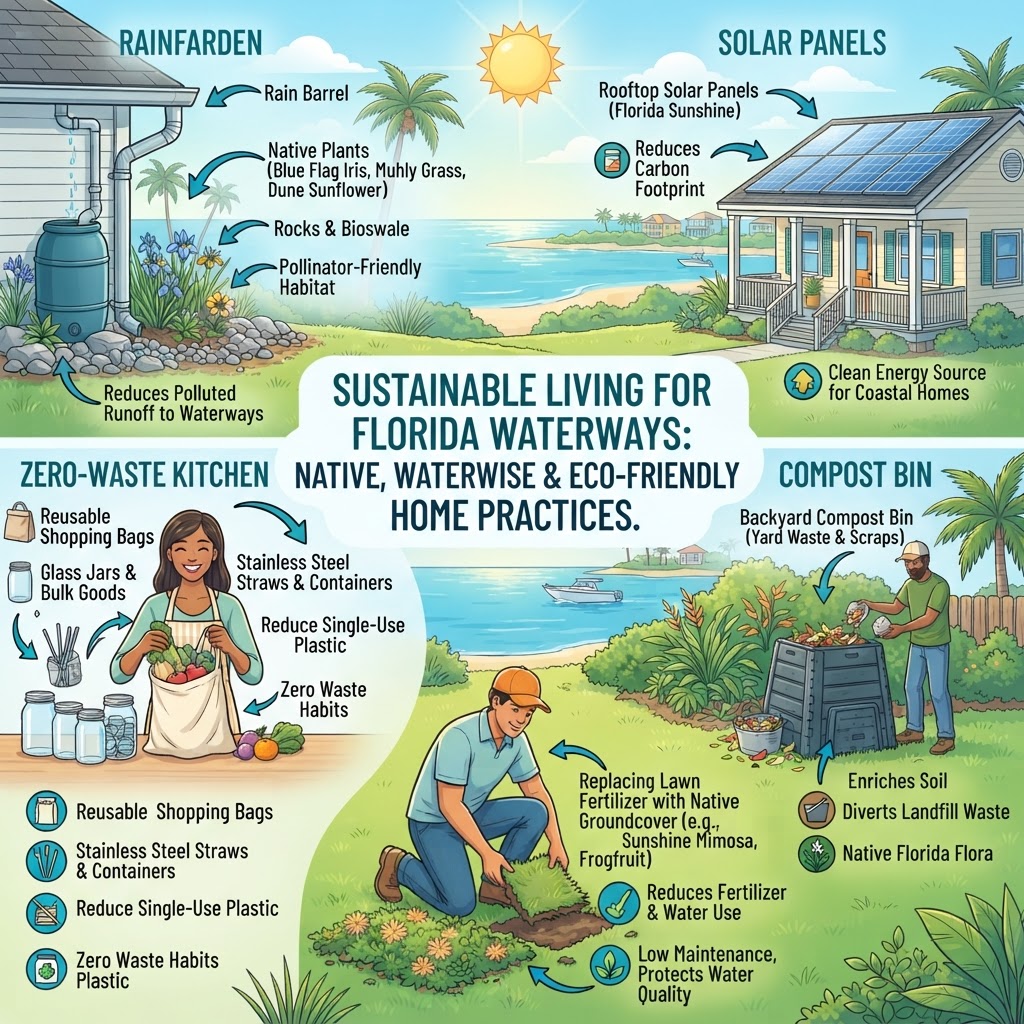
The connection between daily life and the Indian River Lagoon: The IRL watershed: the Indian River Lagoon receives water from a watershed covering approximately 2,230 square miles — the land area that drains into the lagoon through rivers, canals, stormwater systems, and direct groundwater discharge; this watershed includes the homes, businesses, farms, roads, and developed lands of over 1.5 million people. How pollution reaches the lagoon: nutrient pollution (nitrogen and phosphorus) is the primary water quality threat to the IRL; it enters the lagoon primarily through: stormwater runoff (rain washing fertilizer, pet waste, and organic material off lawns and paved surfaces into storm drains that discharge directly to the lagoon); septic system leaching (aging septic tanks that fail to adequately treat nitrogen before it reaches groundwater and eventually the lagoon); atmospheric deposition (nitrogen compounds from vehicle exhaust and power plants deposited directly onto the lagoon surface by rain); direct discharge (permitted and unpermitted stormwater, treated wastewater, and agricultural runoff). Why nutrient pollution matters: excess nitrogen and phosphorus fuel algae growth; algae blooms block sunlight to seagrass; seagrass dies; the fish, manatees, dolphins, and sea turtles that depend on seagrass lose their habitat and food supply; this is the cascade of events that produced the 2011 IRL superbloom and its devastating aftermath. The good news: individual choices at home, multiplied across hundreds of thousands of households in the watershed, represent an enormous collective opportunity to reduce nutrient loading to the lagoon; some of the most impactful changes cost nothing or even save money.