"Stewardship means taking responsibility for something that belongs to all of us. The Indian River Lagoon, Florida's beaches, its springs and forests — these are public resources held in trust for future generations. Every person who lives in Florida has both the right to enjoy these places and the responsibility to protect them. Stewardship isn't just for scientists or professional conservationists — it's for everyone who has ever loved a wild place."
What Is Environmental Stewardship?
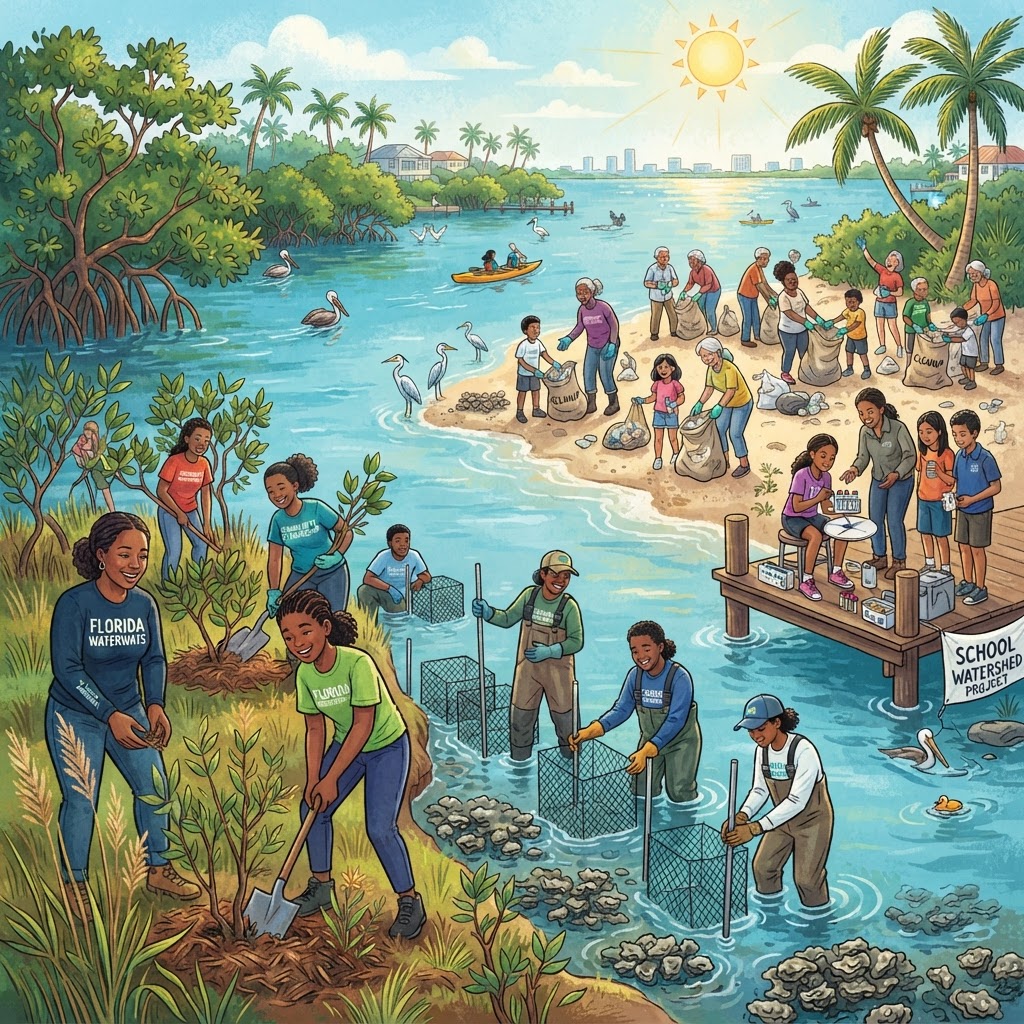
Environmental stewardship defined: stewardship is the ethic of taking responsible care of something entrusted to your charge. In an environmental context, it means acting as a caretaker of natural resources and ecosystems for the benefit of present and future generations. Why community stewardship matters: professional conservation organizations and government agencies cannot protect Florida's environment alone; the sheer scale of Florida's coastline (over 1,350 miles), its 3 million acres of lakes and rivers, its 4,000+ miles of IRL-adjacent shoreline, and its 100,000+ acres of seagrass beds require community-scale monitoring, maintenance, and protection. Community stewardship fills the gap: citizen monitors can report pollution events, illegal dumping, and wildlife violations faster than any agency can; community restoration projects plant thousands of native plants that government contractors would charge hundreds of thousands of dollars to install; local knowledge — knowing where the unusual fish die-off is, where the mystery pipe discharges, where the seagrass thinned — is irreplaceable intelligence for conservation managers. Types of community stewardship projects: coastal and waterway cleanup events; oyster reef and living shoreline restoration; native plant habitat restoration; water quality monitoring networks; wildlife monitoring and reporting programs; citizen science data collection; environmental education and outreach; advocacy and policy engagement. The stewardship ethic: true stewardship goes beyond occasional volunteer events; it is a daily practice — choosing native plants in your yard, maintaining your septic system, using fertilizer responsibly, picking up litter when you see it, reporting environmental violations, and educating others about the importance of these choices.