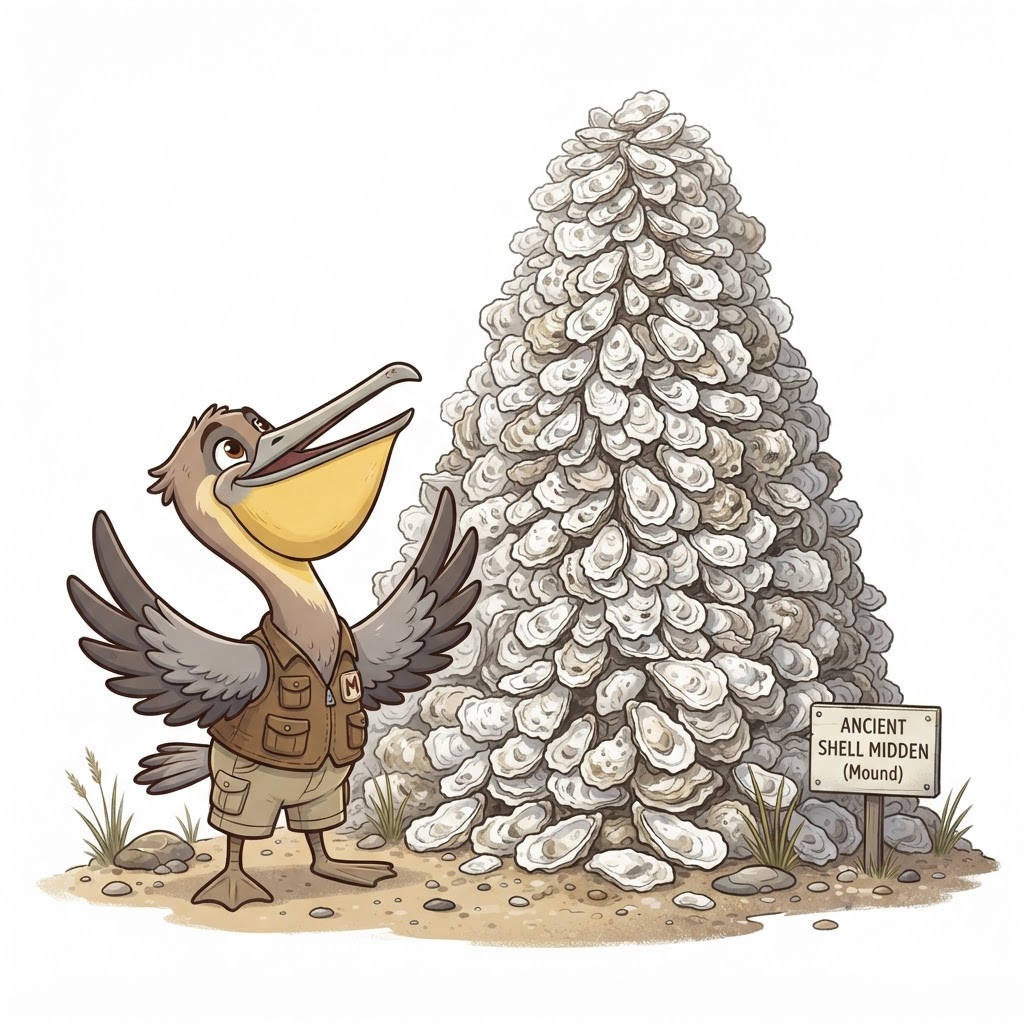
"A midden is an ancient trash pile. For the people who lived on the lagoon for thousands of years, most of their trash was shells — oysters, clams, conchs, and whelks. Over hundreds and thousands of years, these shell piles grew into massive mounds, some as tall as a building. They're called shell middens, and they're all along the Indian River Lagoon."
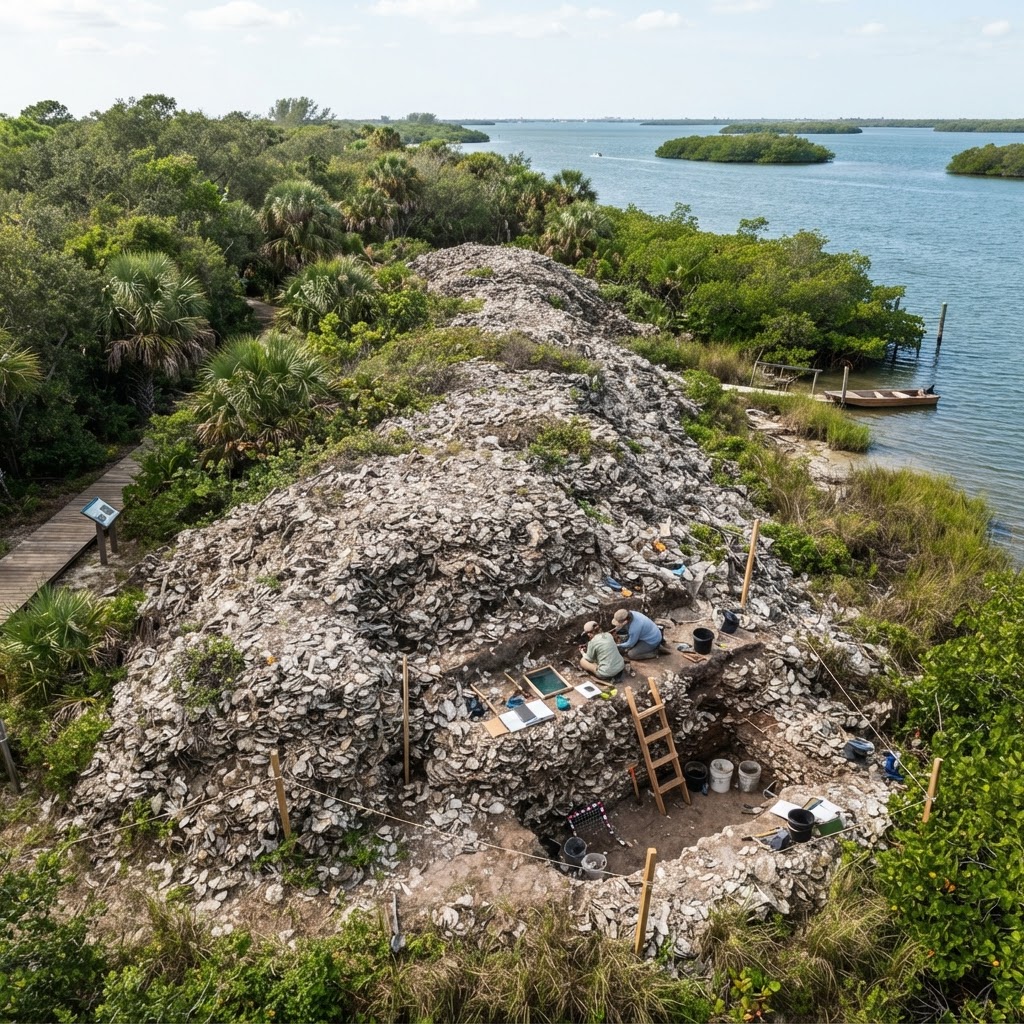
What Is a Shell Midden?
A midden is the archaeological term for an ancient garbage dump. For the indigenous people who lived along the Indian River Lagoon — the Ais, the Timucua, and their ancestors — the largest component of their waste was shells. Oyster shells, clam shells, conch shells, whelk shells, and scallop shells accumulated over centuries and millennia of daily meals. These shells, along with animal bones, pottery fragments, charcoal, and stone tools, were discarded in piles near villages. Over time, the piles grew into mounds — some only a few feet high, others reaching 20 feet or more, extending for hundreds of feet along the shoreline. These shell middens are among the most important archaeological sites in Florida: they preserve a record of thousands of years of human life on the lagoon.