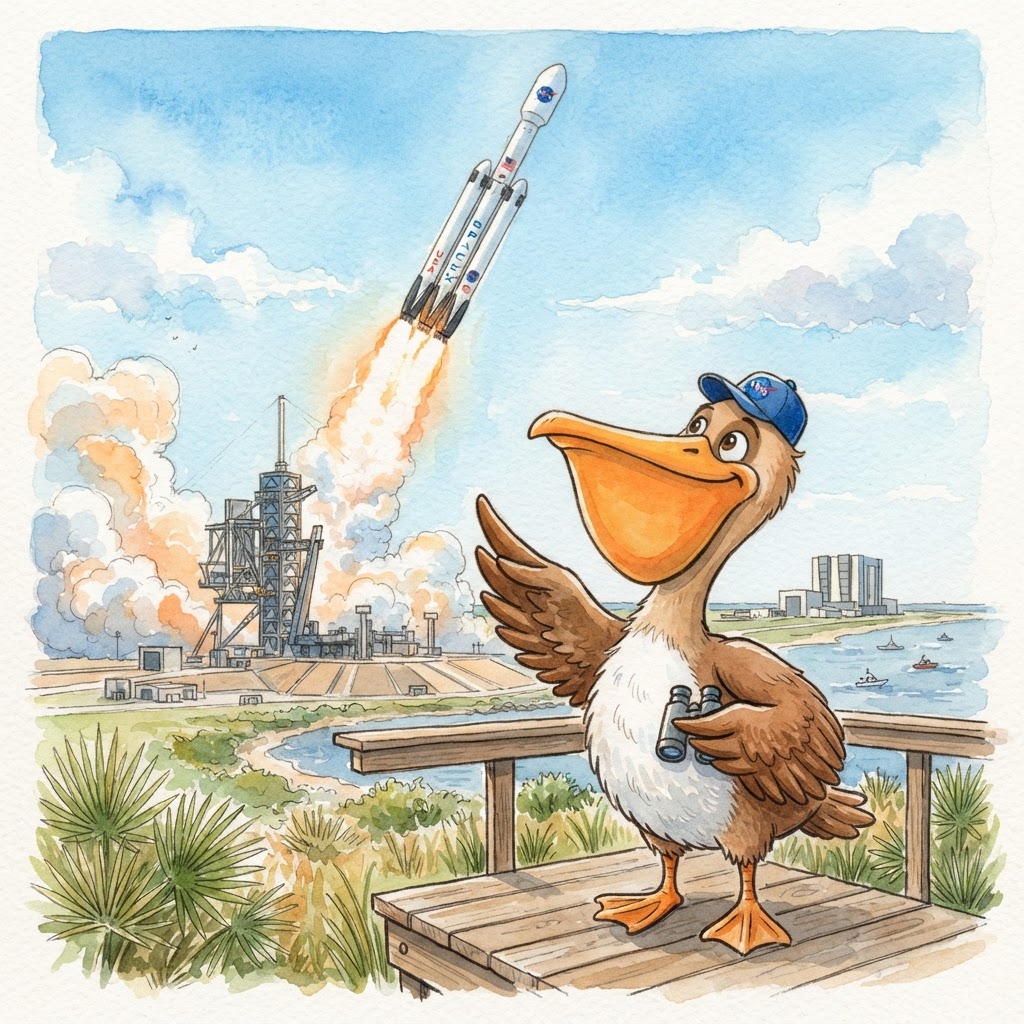
"Why does NASA launch rockets from Cape Canaveral? Because it's on the east coast, close to the equator, and rockets can launch over the ocean — so if something goes wrong, it falls in the water, not on people. That's why the Space Coast became the Space Coast."
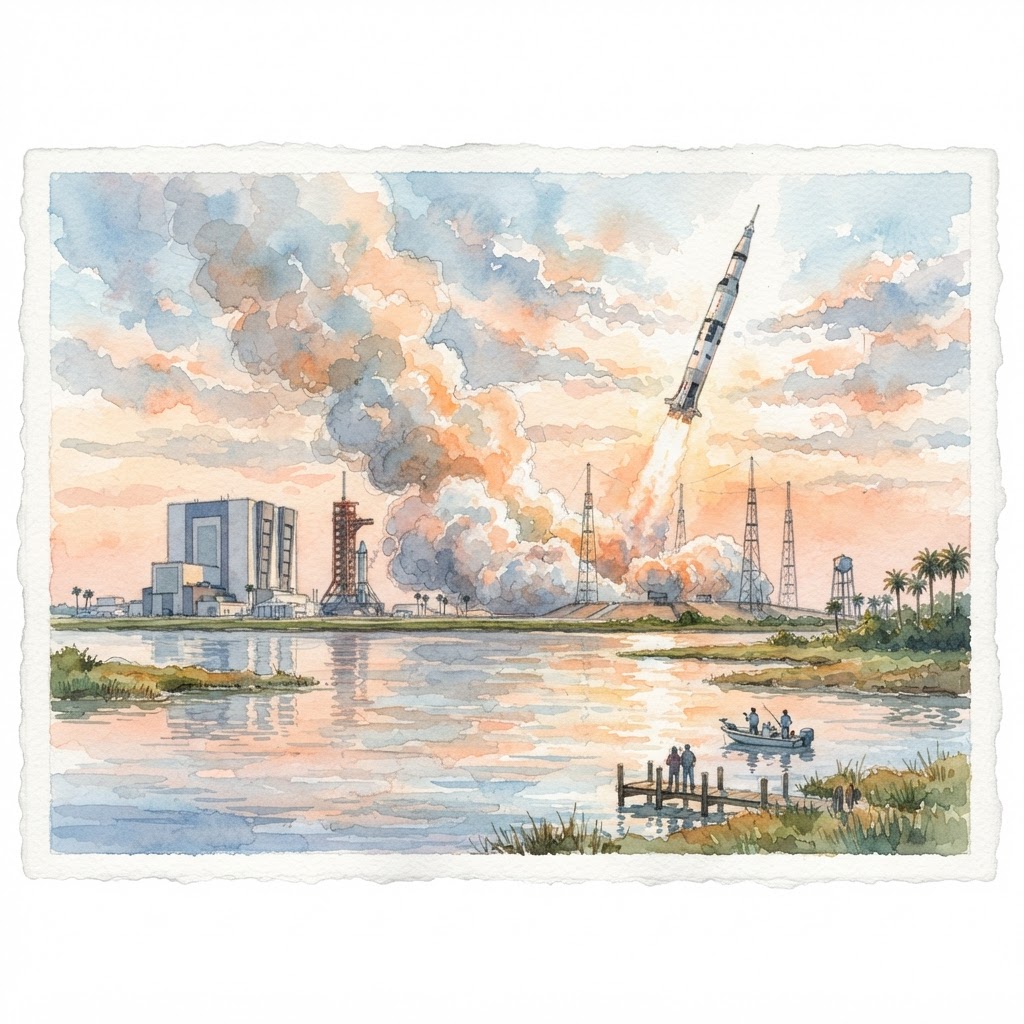
Cape Canaveral: Launch Site
Cape Canaveral was chosen as America's primary rocket launch site for several practical reasons. It's on Florida's east coast, which means rockets can be launched eastward — the direction of Earth's rotation — getting a boost from the planet's spin. Launching eastward over the Atlantic Ocean means that if something goes wrong, debris falls into the ocean, not onto populated areas. Cape Canaveral is also relatively close to the equator (compared to other potential U.S. launch sites), which provides additional velocity from Earth's rotation. The site was established as a missile testing range in the late 1940s, and the first rocket launch from the Cape occurred in 1950. As the Space Race intensified in the 1950s and 1960s, Cape Canaveral became the launch site for America's early satellites, Mercury and Gemini missions, and eventually the Apollo program to the Moon. The adjacent Merritt Island was later developed as the Kennedy Space Center, home to the massive Vehicle Assembly Building and launch pads used for the Saturn V and Space Shuttle. The Indian River Lagoon is the body of water directly west of the Cape and Kennedy Space Center — the Space Coast and the lagoon are intimately connected.