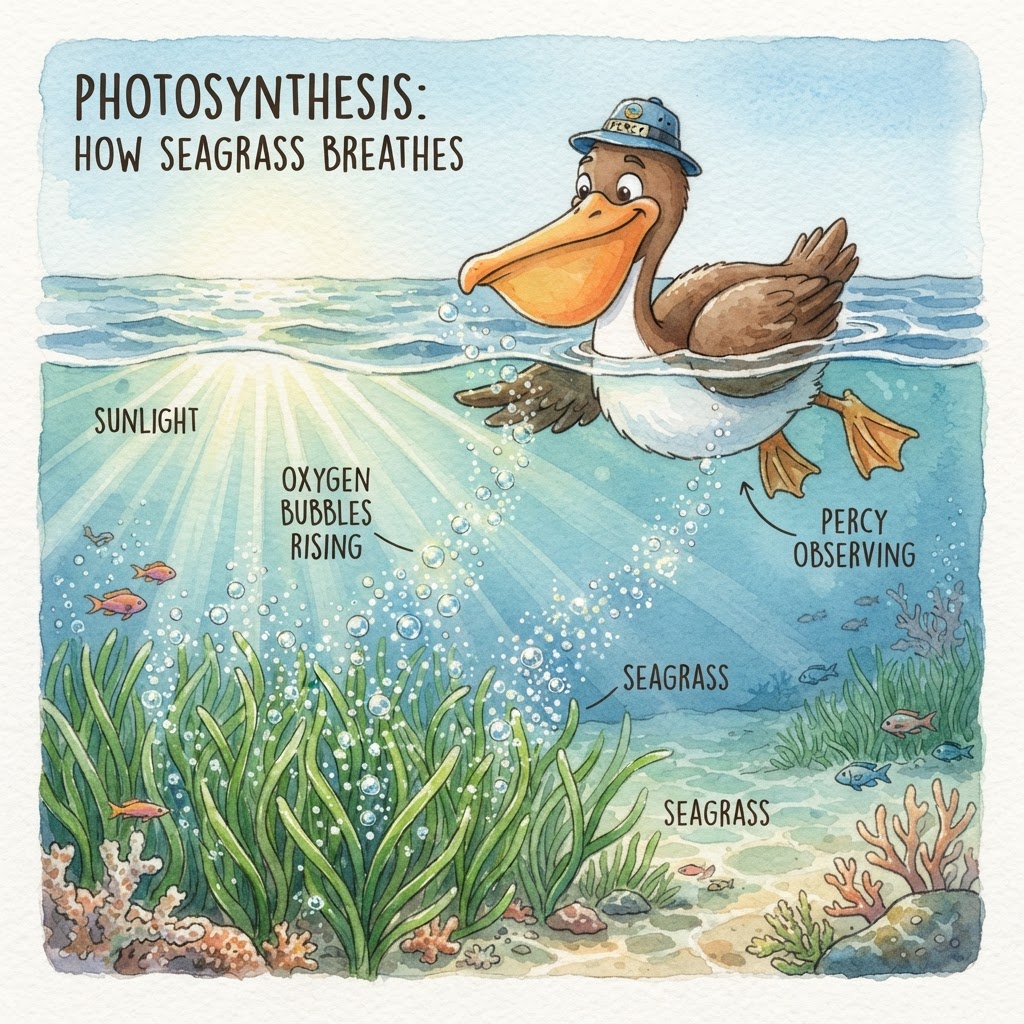
"Photosynthesis is how plants make food from sunlight. They take in carbon dioxide and water, use the sun's energy to turn them into sugar, and release oxygen. It's one of the most important processes on Earth — without it, there would be no oxygen to breathe and no food to eat."
What Is Photosynthesis?
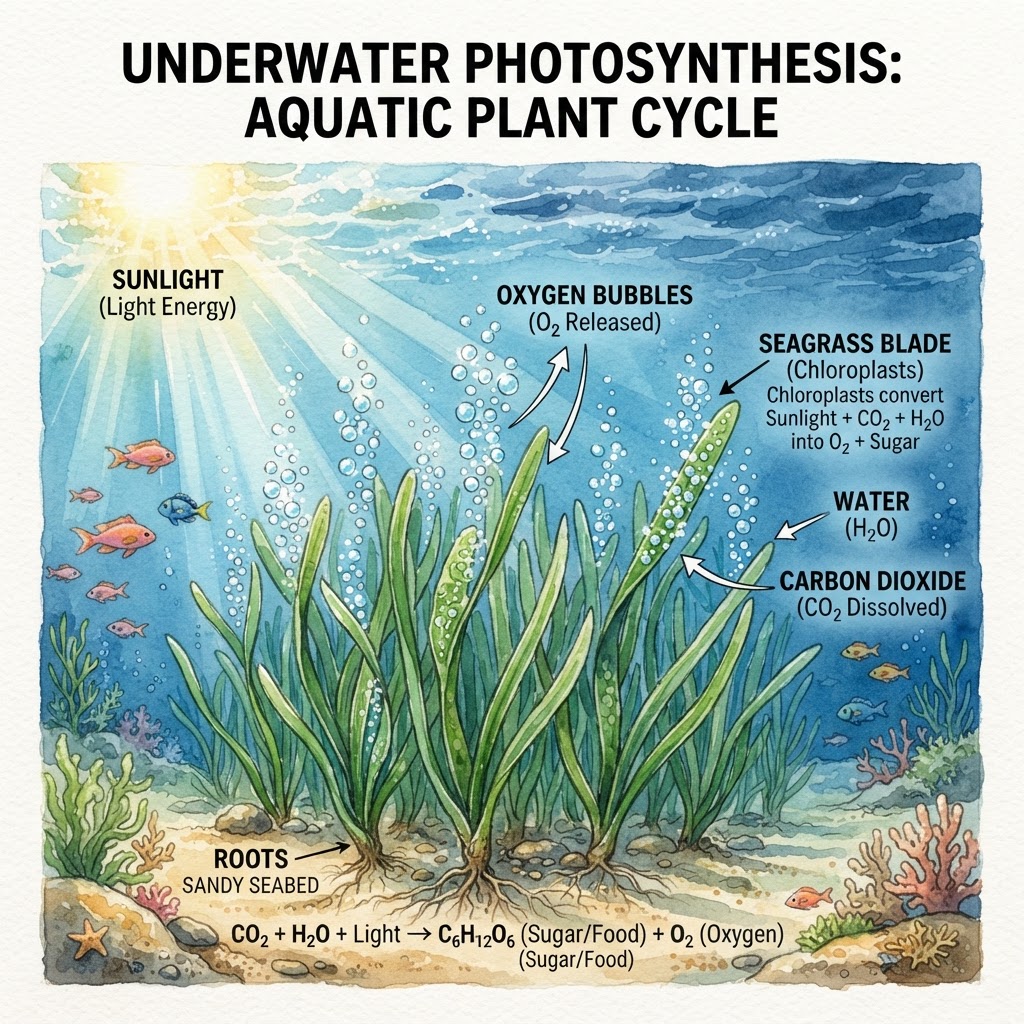
Photosynthesis is the process by which plants, algae, and some bacteria convert sunlight, carbon dioxide, and water into sugar (food) and oxygen. It's one of the most important biological processes on Earth. The basic equation: 6 CO2 + 6 H2O + light energy → C6H12O6 (sugar) + 6 O2 (oxygen). In the Indian River Lagoon, photosynthesis is performed by seagrass, algae, and phytoplankton. Seagrass meadows are particularly important: they use sunlight to produce food, grow, and release oxygen into the water. The oxygen they release is what fish, crabs, and other aquatic life need to breathe. The sugar they produce feeds the entire food web: small fish and invertebrates eat seagrass and algae, bigger fish eat them, and so on. Without photosynthesis in the lagoon, there would be no oxygen, no food, and no life. It's the foundation of the entire ecosystem.