"Florida looks deceptively simple from the road, but get out on the water or into the backcountry and it changes fast. The mangrove tunnels all look the same. The marshes have no trail markers. The wind shifts and the sky changes before you've gone a mile. I've watched well-prepared boaters and hikers get turned around because they assumed their phone signal would hold. Navigation skills aren't about being old-fashioned — they're about being prepared for when technology fails you."
Why Outdoor Navigation Skills Matter in Florida
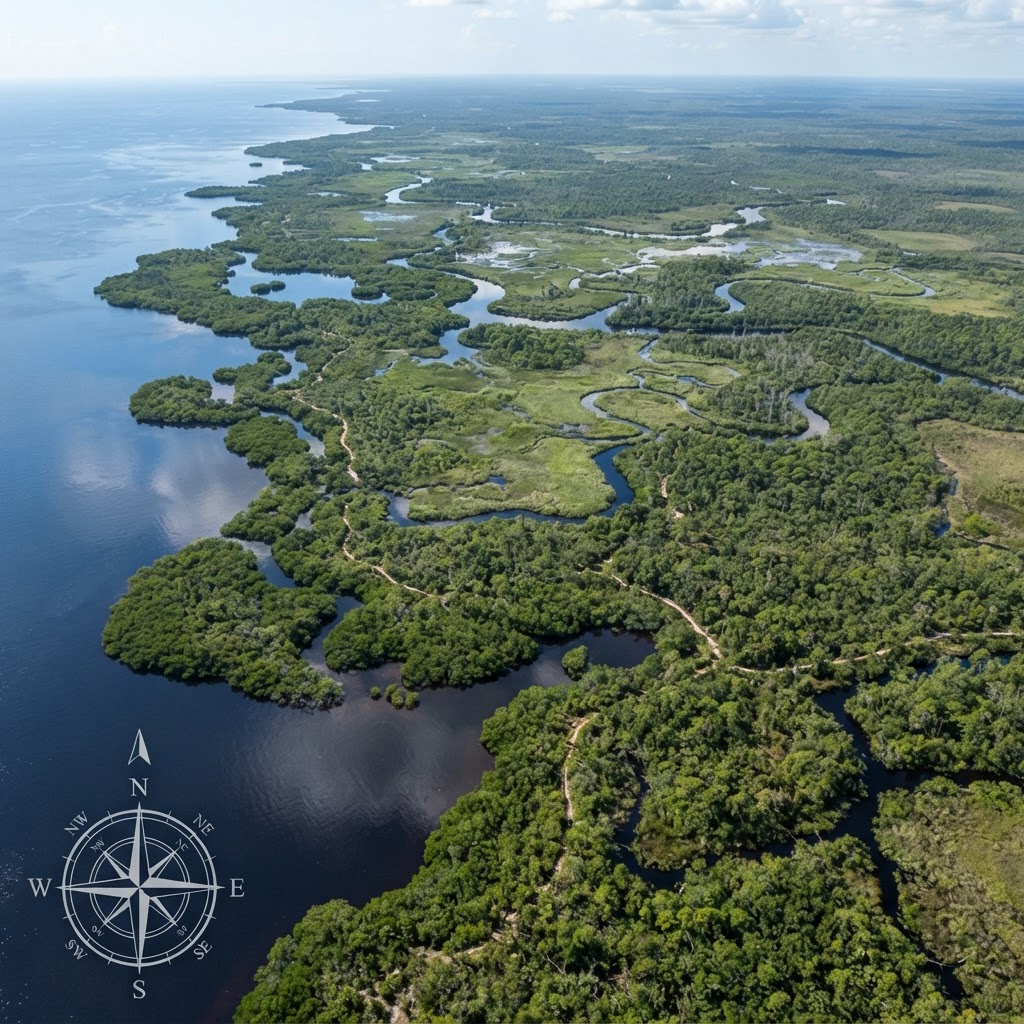
Outdoor navigation skills are one of the most practical and underrated competencies for anyone spending time in Florida's natural environments. Here's why they matter specifically in Florida: Florida's terrain is deceptively disorienting — mangrove tunnels, salt marshes, open water, and dense palmetto scrub all create environments where visual landmarks are scarce and every direction looks similar. Cell coverage is unreliable in many natural areas — including backcountry sections of the Everglades, Big Cypress, and along stretches of the Indian River Lagoon. Battery failure is a real risk — GPS devices and phones are susceptible to dead batteries, water damage, and software failures. Florida's waterways are complex — with hundreds of interconnected bays, rivers, canals, and tidal channels, knowing how to read a nautical chart or identify landmarks is often the difference between finding your way and being stranded. Weather changes rapidly — a navigation plan that was straightforward in calm conditions can become dangerous as fog, afternoon thunderstorms, or strong winds reduce visibility and alter water conditions. Search and rescue data shows that most people who get lost in Florida's backcountry had working cell phones that either lost signal or ran out of battery, and had no backup navigation skills. Learning to read a map, use a compass, and navigate by natural landmarks are foundational outdoor competencies — and in Florida's unique ecosystems, they can save lives.