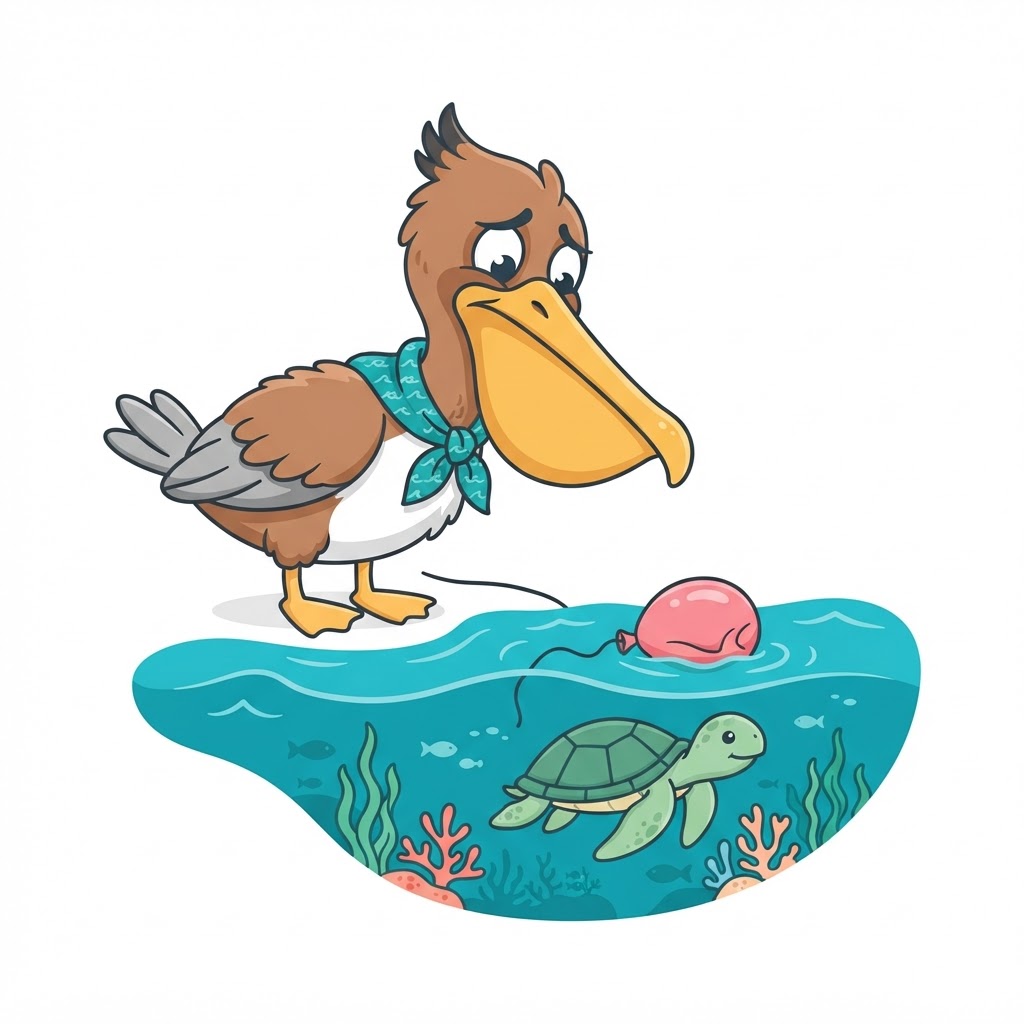
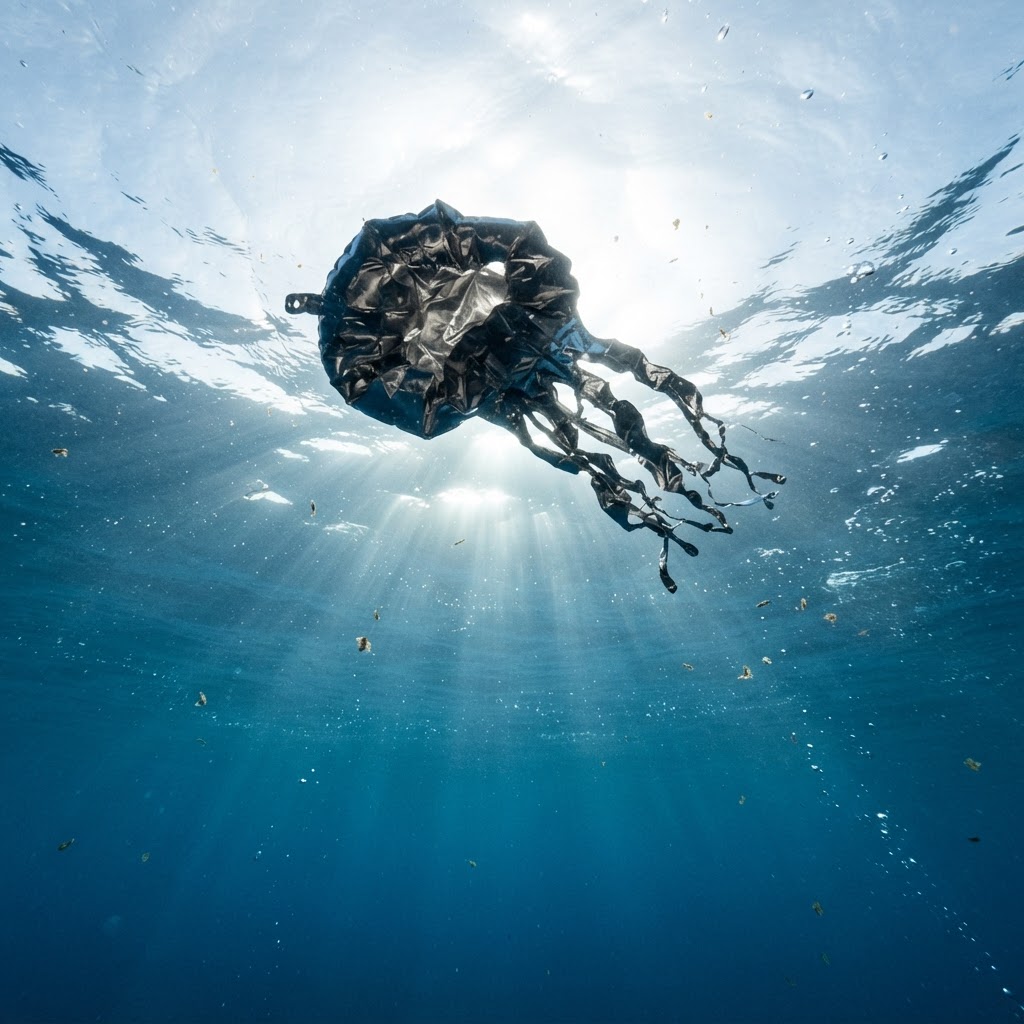
"From below the water, a deflated mylar balloon floating on the surface looks almost exactly like a jellyfish. And for a sea turtle hunting for food, that mistake can be deadly. I want to walk you through exactly how these shiny party decorations end up harming the wildlife I share this lagoon with."
When Celebration Becomes Tragedy — Balloons & Wildlife
Mylar balloons are one of the most directly harmful forms of debris for marine and coastal wildlife. When a balloon deflates and falls into the water, it doesn't just sit there — it becomes a hazard that mimics food, entangles animals, and persists indefinitely. The problem has three main dimensions: Ingestion — marine animals mistake deflated balloons and balloon fragments for prey, especially jellyfish; once swallowed, the material blocks the digestive tract and can be fatal. Entanglement — the plastic ribbon or string attached to every balloon wraps around limbs, wings, necks, and beaks, causing injury, strangulation, and drowning. Persistence — because mylar never biodegrades, a single balloon can harm wildlife for decades, floating and re-entering the food web repeatedly. Scientists with the Marine Conservation Society and NOAA have documented balloon debris affecting over 250 species of marine wildlife worldwide, including all seven sea turtle species, multiple dolphin and whale species, and dozens of seabird species. In Florida's waters, the impact is especially severe because of the density of protected and endangered species that share our coastline.