"If there's one fish that says 'Old Florida,' it's the mullet. The striped mullet has been the most important food fish on the lagoon for thousands of years. The Ais caught them. The settlers caught them. They smoked them, they salted them, they fried them. The mullet run — when huge schools flood through the lagoon — was one of the biggest events of the year."
The Mullet — Florida's Fish
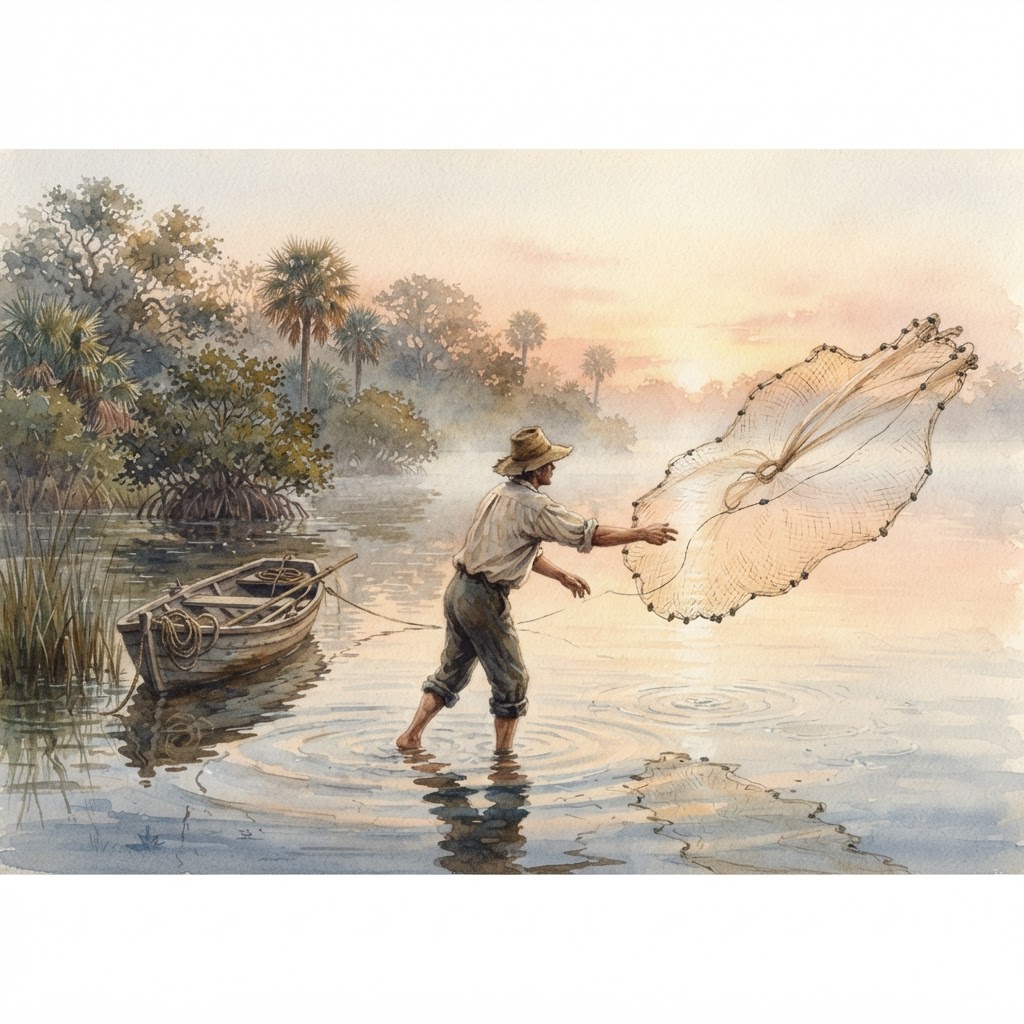
The striped mullet (Mugil cephalus) is one of the most important fish in Florida's history. The Ais people of the Indian River Lagoon harvested mullet for thousands of years; mullet bones are among the most common remains in their shell middens. When American settlers arrived, mullet became one of the primary food fish of the lagoon — cheap, abundant, and easy to catch. Mullet are herbivores that feed on algae and detritus; they graze the lagoon's bottom and surfaces like underwater lawnmowers, playing an important ecological role. The 'mullet run' — when large schools of mullet move through the lagoon and along the coast, typically in fall — was historically one of the biggest events of the fishing year, a time when families would harvest enough fish to smoke, salt, and eat through the winter. Mullet was so central to Old Florida life that it gave its name to the iconic 'mullet haircut' — short in front, long in back — supposedly inspired by the fish's shape. The mullet is Florida's fish.