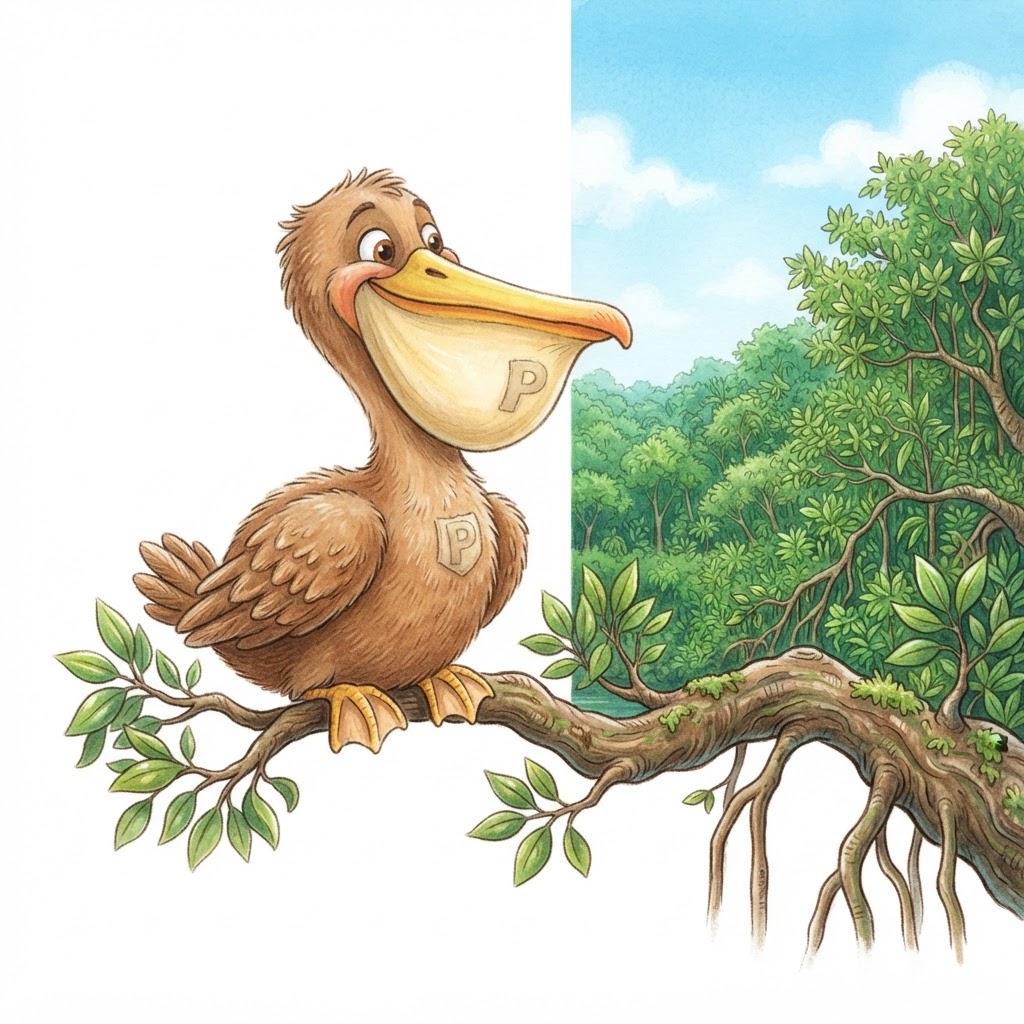
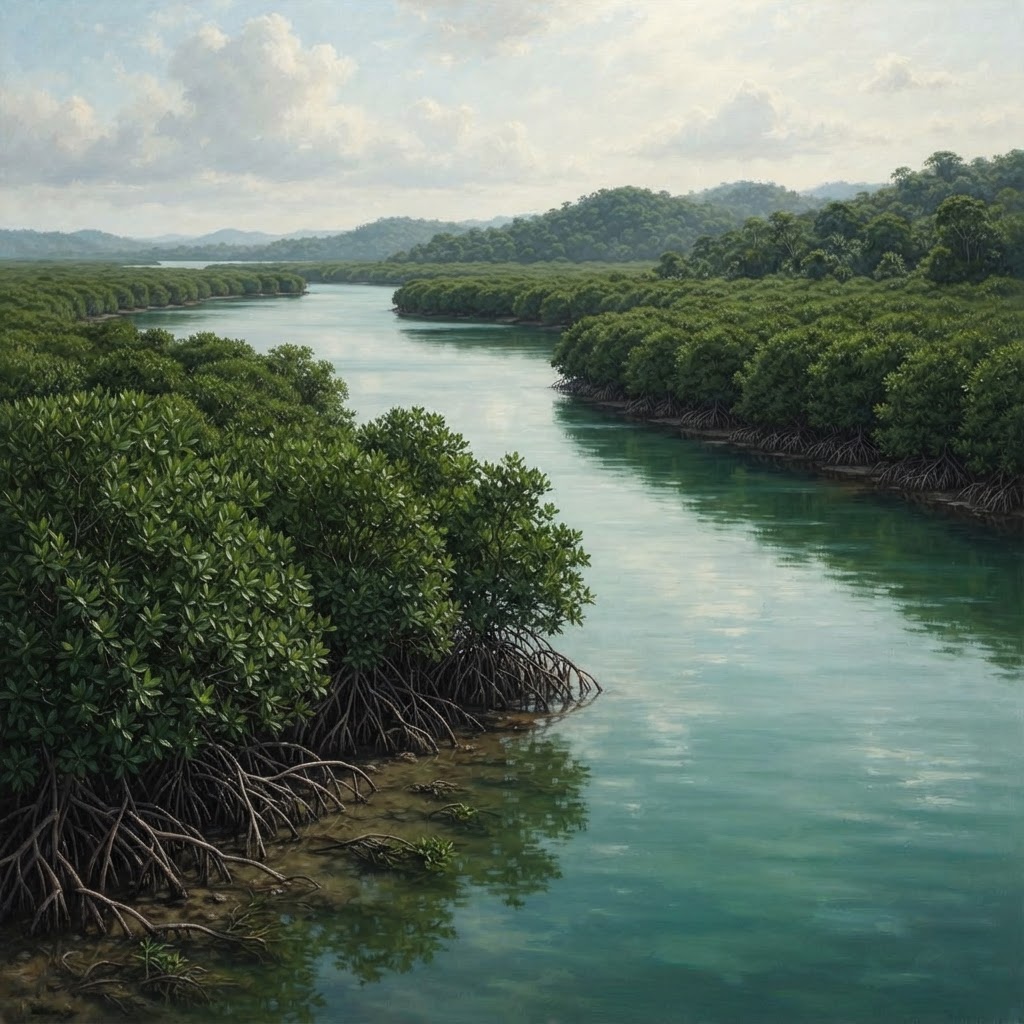
"Five hundred years ago, the lagoon's shoreline wasn't a line of seawalls and condos. It was a green wall — miles and miles of mangrove forest, unbroken, from the water's edge to the high ground. That forest was the lagoon's shield, its filter, and its nursery, all in one."
A Green Wall
Before development, the lagoon's shoreline was a continuous mangrove forest: The pre-development Indian River Lagoon was lined with an almost unbroken forest of mangroves. What mangroves are: Mangroves are trees that have adapted to live in salt and brackish water along tropical and subtropical coasts. Florida has three main species — red, black, and white mangroves — each occupying a slightly different zone from the water's edge to the high ground. The green wall: Along the pre-development lagoon, mangroves formed a thick, continuous fringe — a wall of green from the water's edge, sometimes hundreds of feet deep. There were no seawalls, no lawns, no docks. Just forest meeting water. Why it mattered: This mangrove fringe was the lagoon's natural shoreline protection. It calmed waves, held the soil, filtered water, and sheltered young fish and crabs. When we replaced the mangroves with seawalls and manicured lawns, we replaced a living, working system with a hard, dead one. The pre-development mangrove forest is one of the most important things the lagoon has lost.