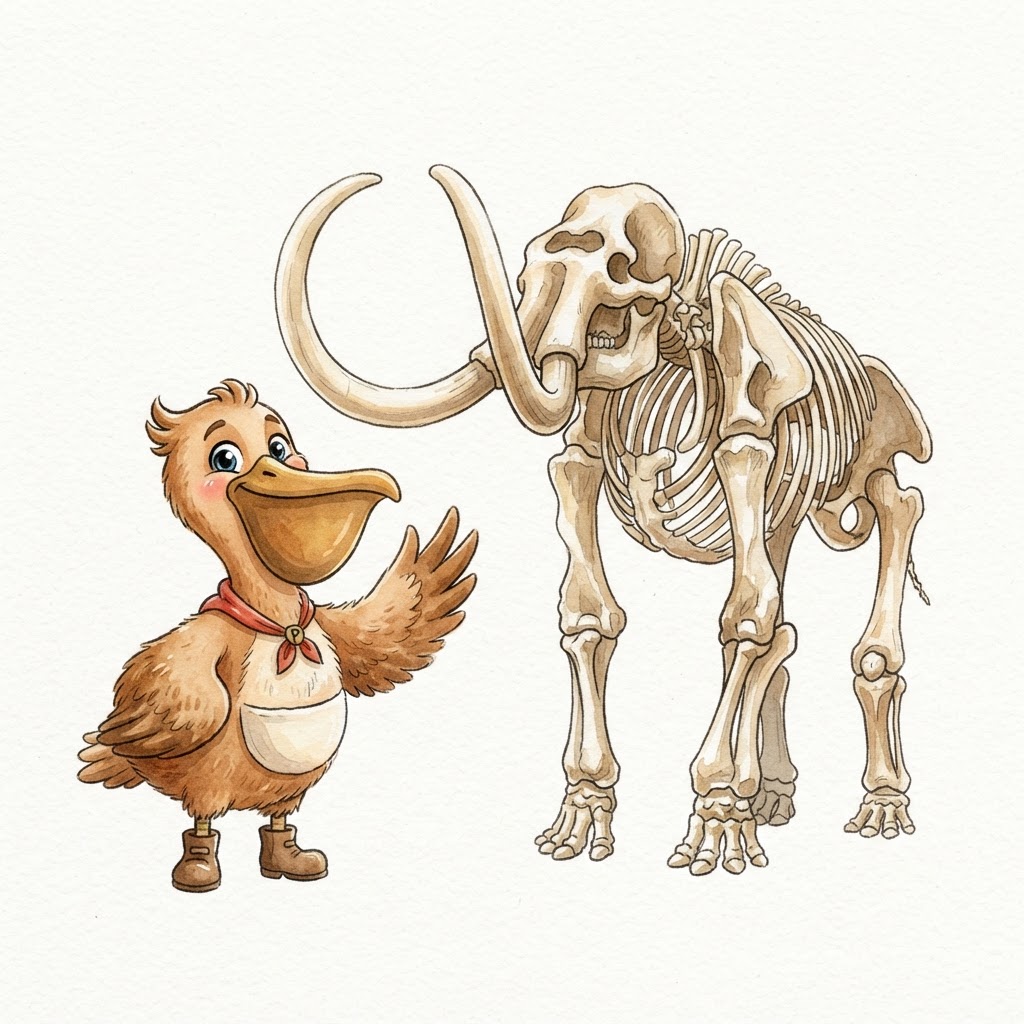
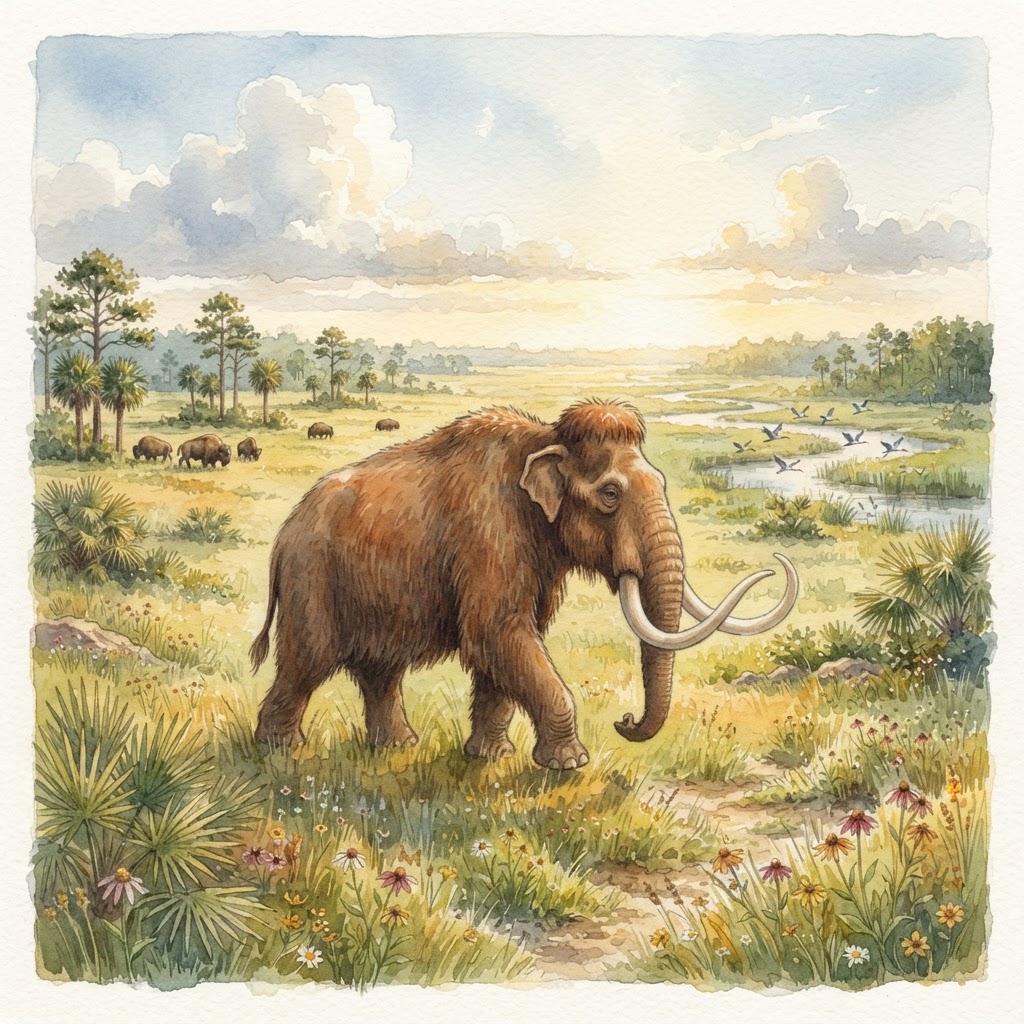
"Imagine a Florida without roads, without buildings, without people — a vast grassland where animals the size of trucks walked. That was Florida during the Ice Ages. Mammoths, mastodons, giant sloths, and saber-toothed cats roamed right where our towns are now. Their bones are still here, buried in the sand."
Florida's Prehistoric Giants
During the Pleistocene epoch — the Ice Ages, roughly 2.6 million to 11,700 years ago — Florida was home to an extraordinary community of large mammals known as the 'Pleistocene megafauna.' These animals lived on the grasslands, savannas, and wetlands of prehistoric Florida, alongside early human hunters who arrived at least 14,000 years ago. The most iconic of these giants were the mammoths and mastodons — elephant relatives that browsed the trees and grazed the grasses. But the megafauna also included giant ground sloths the size of elephants, saber-toothed cats with 8-inch canine teeth, dire wolves, giant beavers, ancient horses, camels, tapirs, and even a giant armadillo relative called a glyptodont that was the size of a small car. These animals thrived in Florida for hundreds of thousands of years. Their fossils — bones, teeth, and tusks — are found across the state, preserved in river sediments, phosphate mines, and sinkholes. Florida was a land of giants, and evidence of that prehistoric world is still beneath our feet.