"The Indian River Lagoon is one of the most biodiverse estuaries in North America — over 4,300 species of plants and animals call it home. But to truly understand and connect with the lagoon, you need to get on the water. Fortunately, there are dozens of public boat ramps, kayak launches, nature trails, and boardwalks all along the 156-mile lagoon. Most are free or low-cost to access. The lagoon is a public resource — it belongs to all of us."
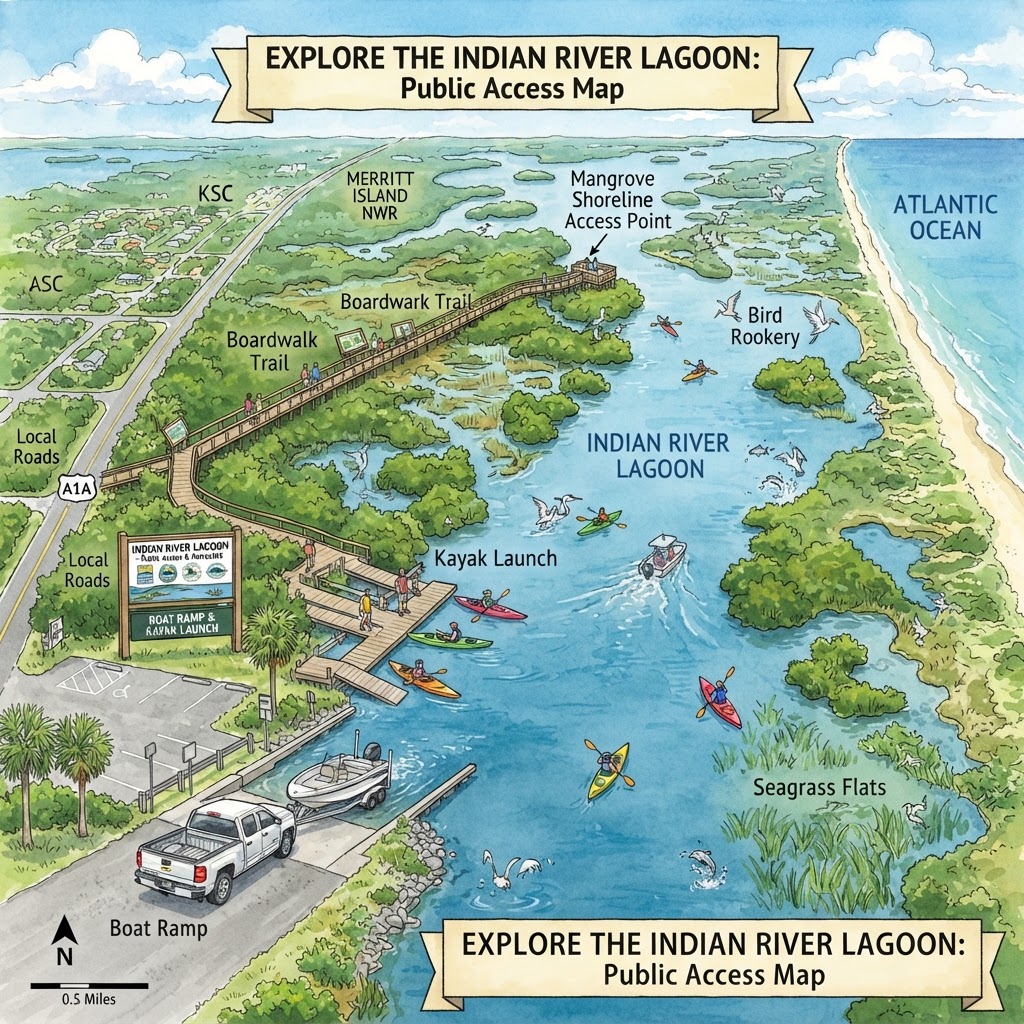
Getting on the Indian River Lagoon
The Indian River Lagoon spans 156 miles along Florida's east coast, running through Volusia, Brevard, Indian River, St. Lucie, and Martin counties. The lagoon is a public waterway — anyone can paddle, boat, swim, fish, or observe wildlife on it, provided they follow Florida's boating, fishing, and wildlife protection regulations. Types of lagoon access: Public boat ramps — concrete ramps where you can launch a motorized or non-motorized vessel; most are managed by county parks departments and are free or require a small daily fee or annual pass. Kayak and canoe launches — smaller water access points designed for non-motorized craft; often located in more scenic, shallow areas with mangrove access; free at most locations. Nature trail boardwalks — elevated wooden walkways over marsh or shallow water that allow you to observe lagoon wildlife without getting wet; excellent for families with children and wildlife photography. Fishing piers — public fishing piers over the lagoon that are free to fish from (with a valid Florida fishing license for those 16+). No vessel required — many of the lagoon's most spectacular wildlife experiences can be had from shore, bridge, or pier. Required knowledge for on-water access: Florida boating safety education (required for operators born after January 1, 1988), awareness of manatee speed zones (posted on waterways), catch-and-release regulations in protected areas, and Leave No Trace principles for waterway access.