"Plastic doesn't disappear — it just gets smaller. Every plastic straw, bag, bottle, or foam cup that reaches Florida's waterways breaks down over decades into microplastics that enter the food chain at every level. I've watched pelicans mistake plastic bags for jellyfish. I've seen manatees with fishing line wrapped around their flippers. This isn't an abstract problem — it's happening every day in every Florida waterway, and the single-use plastic choices people make are a direct driver of it."
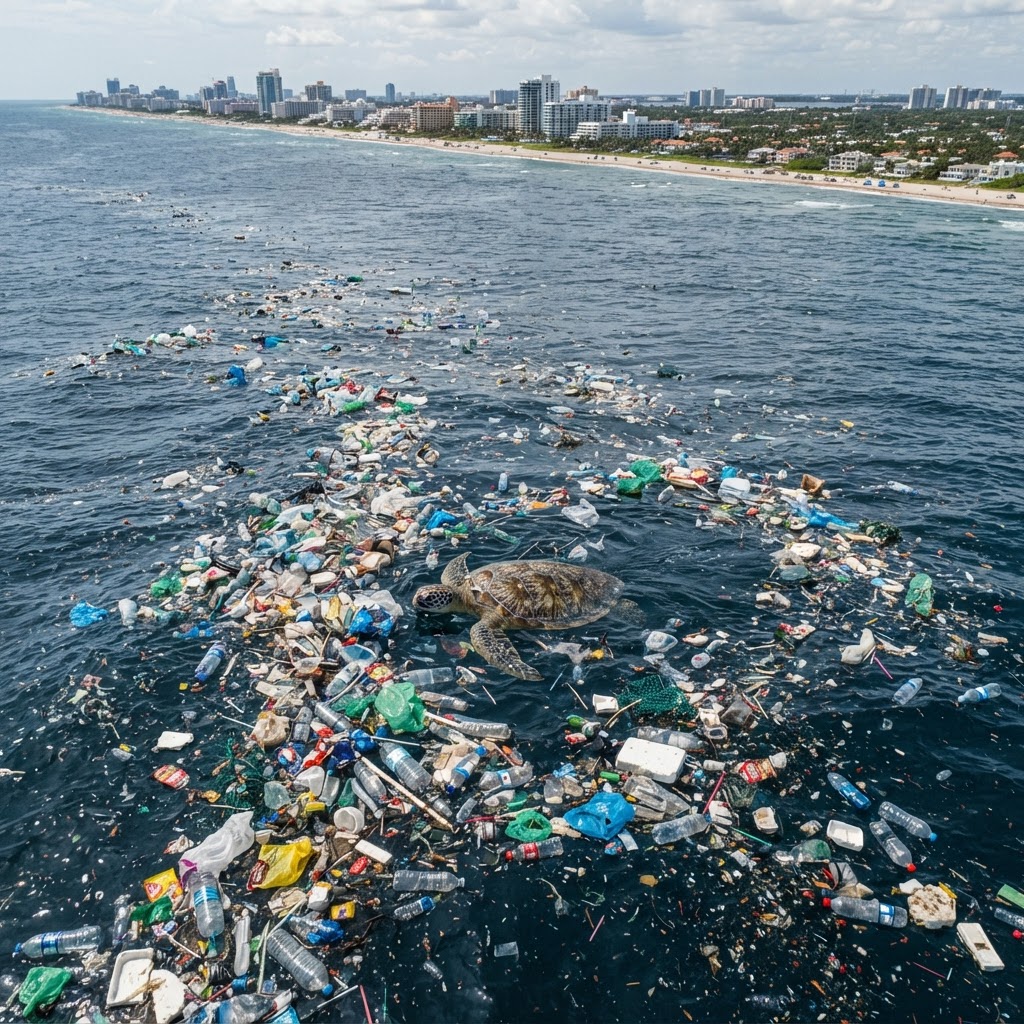
The Plastic Problem in Florida's Waterways
Florida's coastal ecosystems face an escalating plastic pollution crisis. An estimated 8 million metric tons of plastic enter the world's oceans every year — equivalent to dumping a garbage truck of plastic into the ocean every minute. In Florida specifically: The Indian River Lagoon receives plastic pollution from storm drains, boat traffic, recreational use, and coastal runoff across a 156-mile watershed. Florida's beaches rank among the most plastic-polluted in the southeastern United States, with plastic debris washing in from both the Atlantic and Gulf of Mexico. Marine animals in Florida's waters — sea turtles, manatees, dolphins, seabirds, and fish — all face documented plastic-related threats: ingestion, entanglement, and habitat degradation. Plastics in the marine environment never fully biodegrade — they photodegrade, breaking into progressively smaller fragments called microplastics over decades to centuries. A single plastic bottle may persist in the marine environment for 450 years. A plastic bag, 20 years. A styrofoam cup can take over 500 years. Going plastic-free isn't about individual sacrifice — it's about reducing the flow of persistent pollutants into ecosystems that cannot process or recover from them.