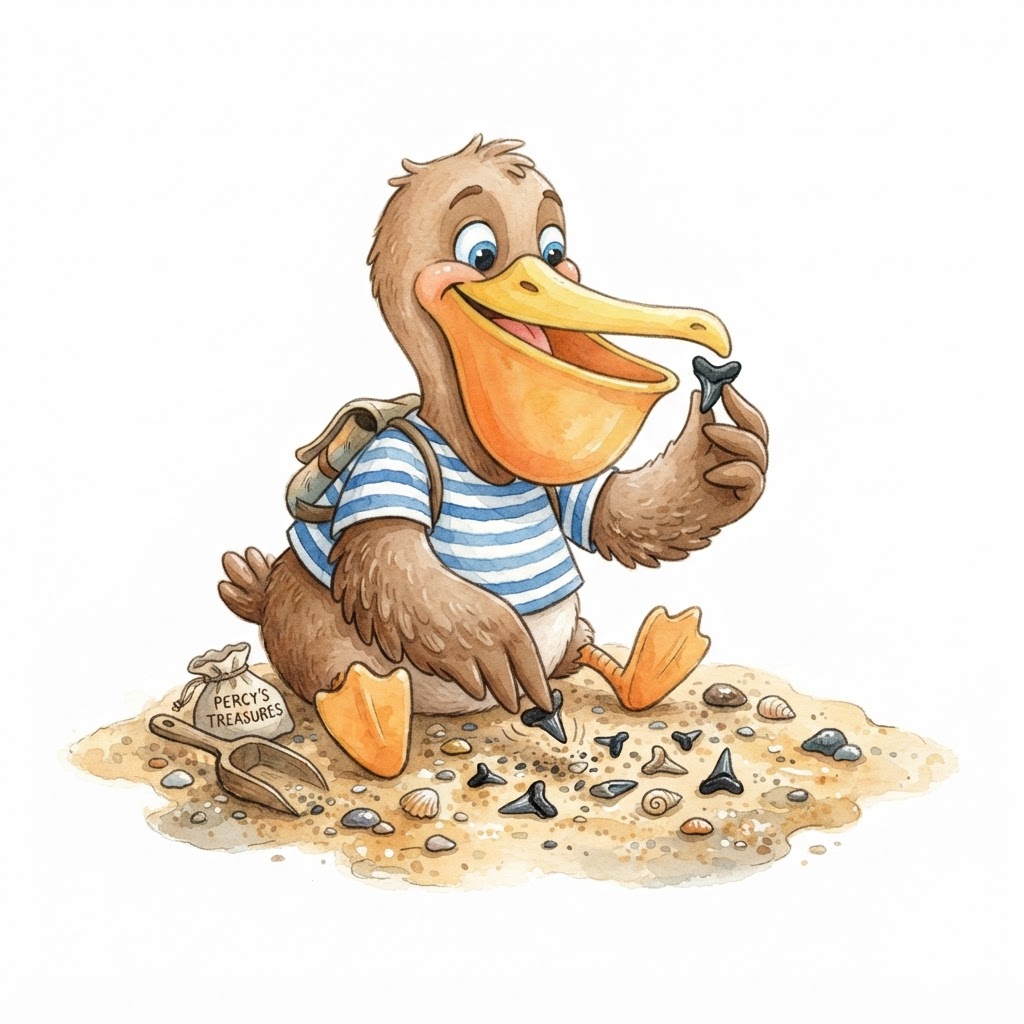
"Florida is one of the best places in the world to find fossils. The reason is simple: for millions of years, most of Florida was underwater. That means the seabed accumulated shells, shark teeth, and the bones of sea creatures. When the sea level dropped, those fossil beds became dry land — our beaches and riverbanks."
Fossils in Florida
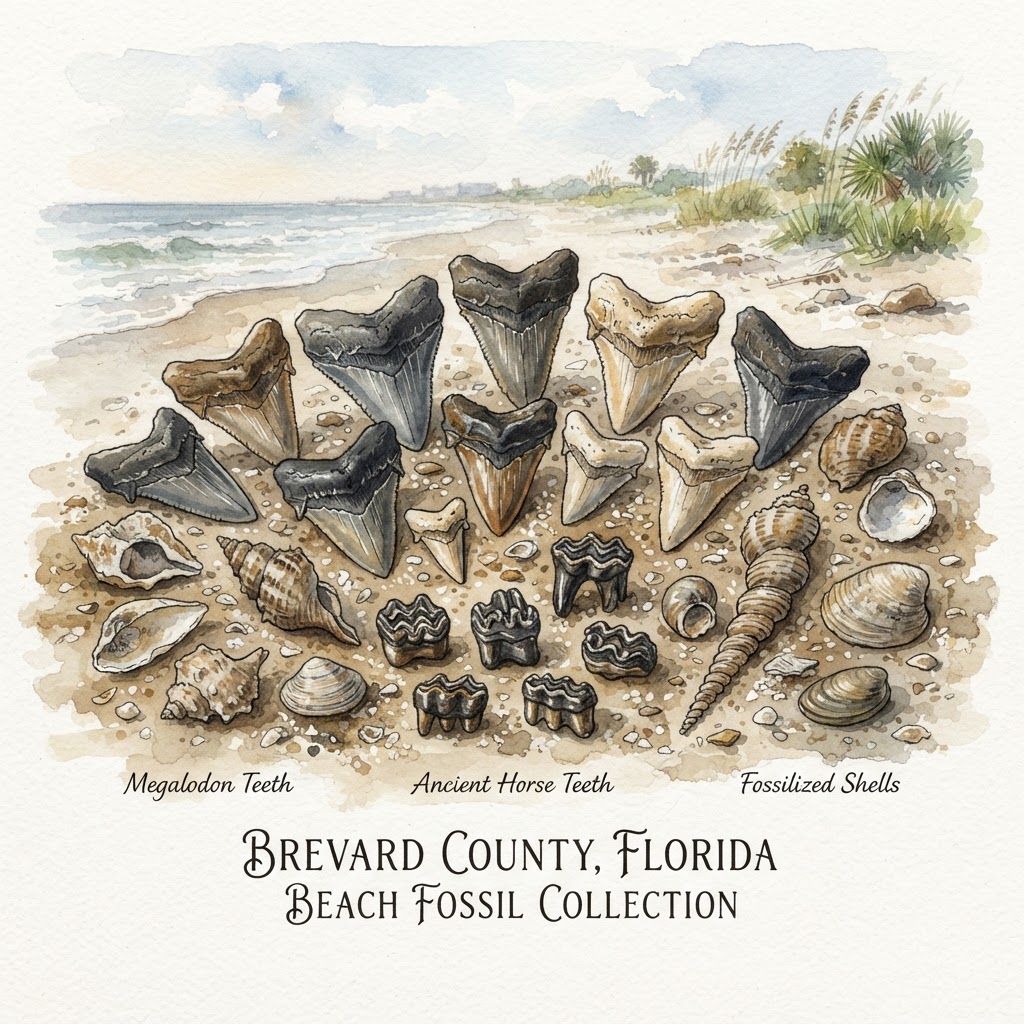
Florida is a fossil hunter's paradise, and Brevard County is no exception. The reason lies in Florida's geological history: for much of the last 40 million years, most of the Florida peninsula was submerged beneath the ocean. During these periods, the seabed accumulated layers of sediment — sand, clay, limestone — full of the shells, teeth, and bones of marine animals. When sea levels dropped during ice ages, these fossil-rich sediments became dry land. Rivers, waves, and erosion continue to expose these fossil beds today. Florida's fossil record spans over 40 million years, including the Eocene, Oligocene, Miocene, Pliocene, and Pleistocene epochs. Brevard County's beaches, especially after storms, regularly yield fossil shark teeth, fossil shells, and the bones of prehistoric mammals. The Peace River, about 90 miles west of Brevard, is even richer — it cuts through fossil-bearing formations and produces thousands of teeth, bones, and artifacts each year.