"Hey Water Sweepers — hooks are one of the most common causes of fishing injuries, and almost every single one is preventable. I've watched people get hooks in their fingers, ears, and even their eyes from simple carelessness. Let me walk you through the right way to handle the sharpest tool in your tackle box."
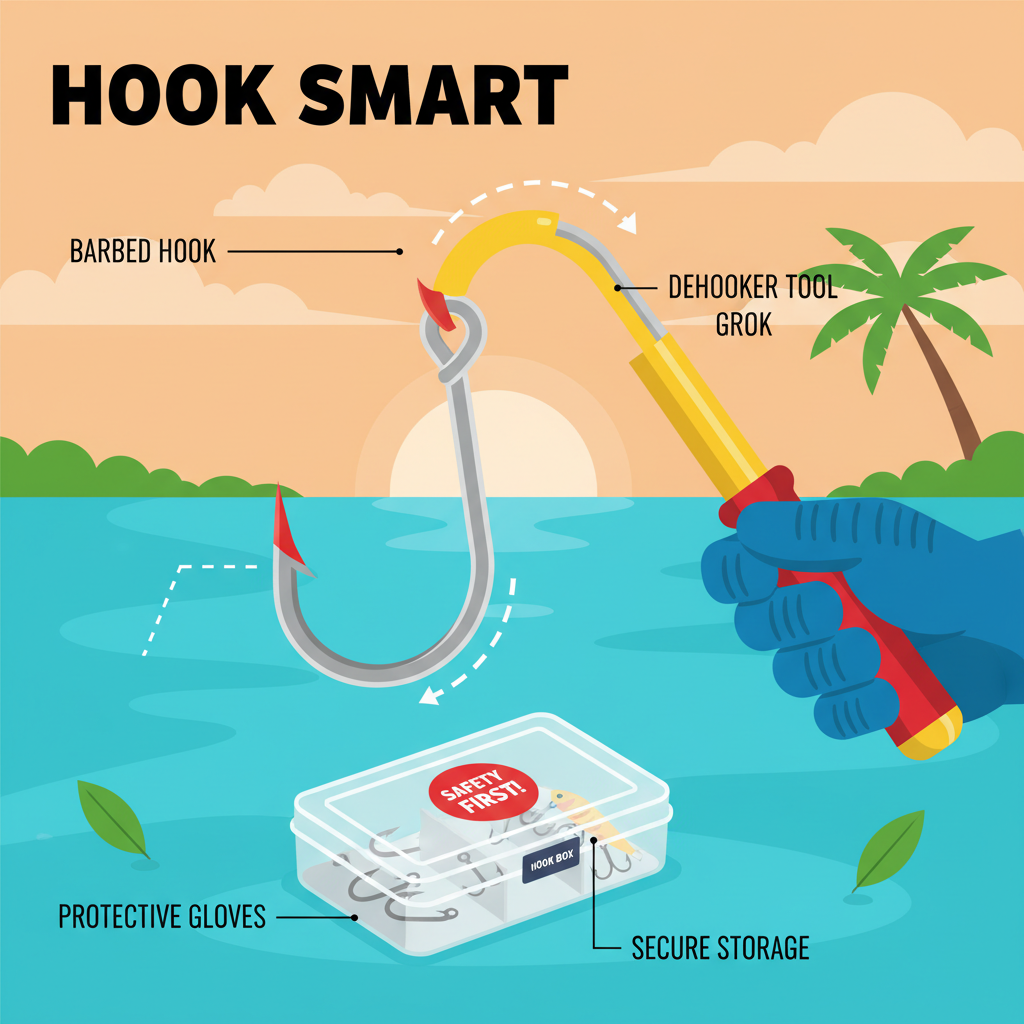
Hook Safety
Respect the Point — It Doesn't Know the Difference
Fishhooks are designed to penetrate and hold — and they don't discriminate between a fish's lip and a human finger. Hook injuries are extremely common and can range from a minor puncture to a deeply embedded barb requiring medical removal. 🪝 Safe Hook Handling: • Always close your tackle box when not actively selecting a lure — open boxes are fall-and-stab hazards • Store hooks point-down in foam holders, never loose in the bottom of a bag • Use a dehooker tool or needle-nose pliers — never reach fingers directly into a fish's mouth on a single hook rig • Keep a hook with a towel or rubberized grip while baiting — never hold it loosely while the boat moves • When not in use, secure treble hooks into closed lure body or use hook covers 🆘 If You Get Hooked: • Do NOT pull straight back — the barb will tear flesh • If the barb has not cleared the skin, the "push-through" method (with pliers) or the "string yank" method are field techniques — but any deep hook, face hook, or eye-adjacent hook requires an ER visit • Clean any puncture wound with fresh water and antiseptic immediately • Hooks are not sterile — tetanus concerns apply; check your vaccination status ⚠️ Barbed vs. Barbless: • Many conservation-minded anglers use barbless or crimped-barb hooks — they're easier to remove from both fish and fingers • Barbless hooks don't statistically reduce catch rates on most species but dramatically reduce injury severity