"Hey Water Sweepers! I'm Percy, and the Indian River Lagoon is one of the most important fish spawning and nursery habitats on the entire East Coast. Snook, redfish, tarpon, spotted seatrout — they all depend on this lagoon to reproduce and grow. But that system is under serious pressure. Let me show you how it works and why it matters so much!"
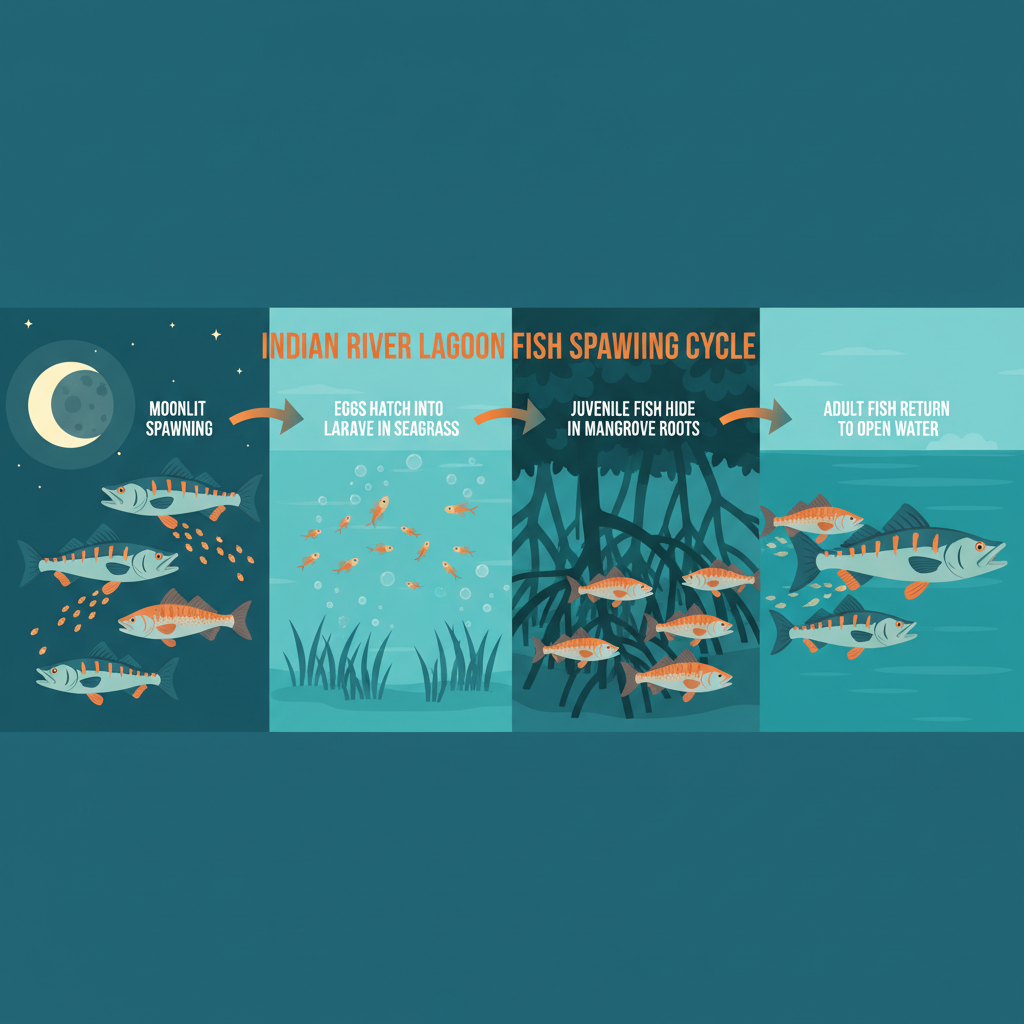
Fish Spawning & Habitat Restoration
The Indian River Lagoon is one of the most important fish spawning and nursery habitats on the entire East Coast. Snook, redfish, tarpon, and spotted seatrout all depend on this lagoon to reproduce and grow. The IRL supports more than 700 species of fish — more than any other estuary in North America — and serves as critical spawning and nursery habitat for dozens of them. Before seagrass losses began, the IRL had over 77,000 acres of seagrass meadows, the primary nursery habitat for juvenile fish, but over 47,000 acres have been lost since 2011. Mangrove root systems provide shelter for spawning adults and juvenile fish, stretching across hundreds of miles of shoreline and legally protected. But snook, redfish, and trout populations in the IRL have declined significantly due to habitat loss, water quality collapse, and recurring fish kills since the 2011 superbloom.