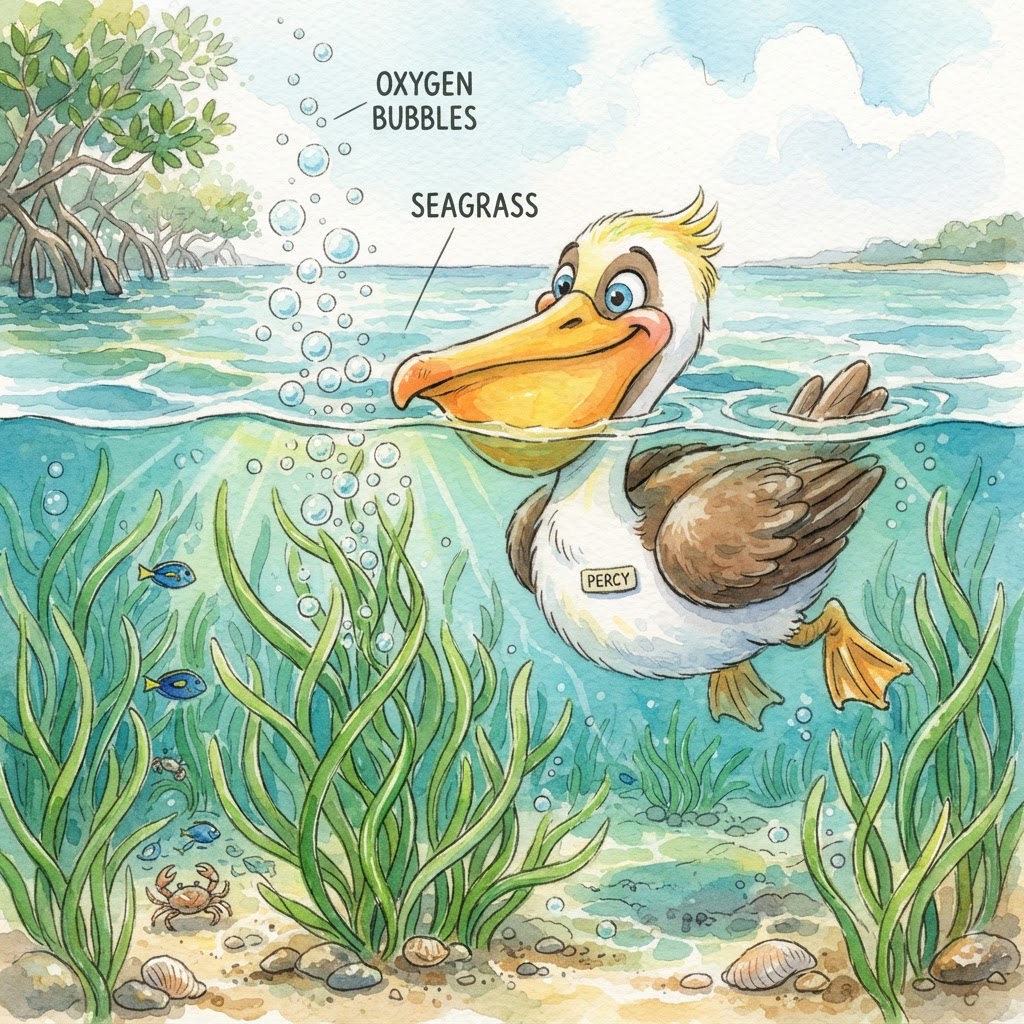
"Fish breathe oxygen — just like we do. But they get it from the water, through their gills. Dissolved oxygen is the amount of oxygen dissolved in the water. When it's high, fish are happy. When it's low, fish struggle to breathe — and can die."
What Is Dissolved Oxygen?
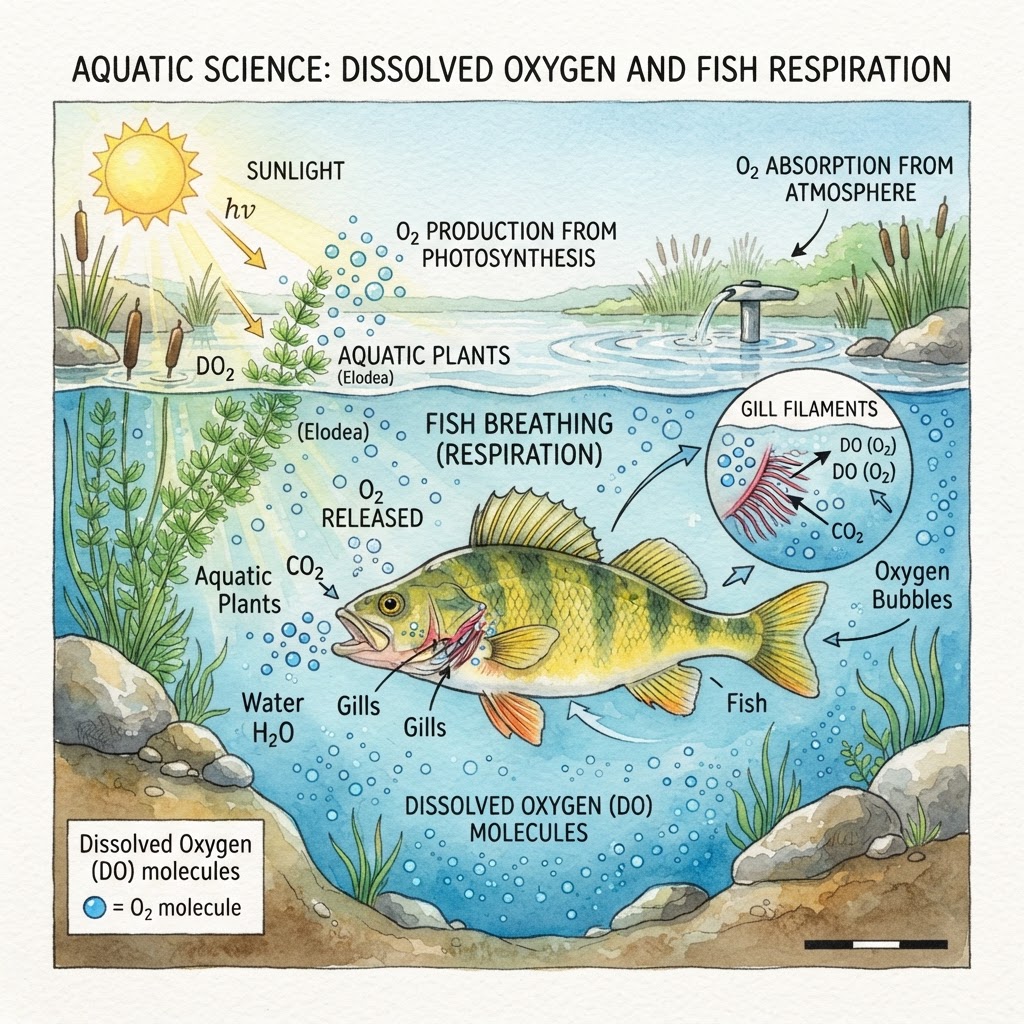
Dissolved oxygen (DO) is the amount of oxygen gas dissolved in water, measured in milligrams per liter (mg/L). Fish, crabs, shrimp, and other aquatic animals need oxygen to survive, just as land animals do — but they extract it from water through gills rather than from air through lungs. The amount of oxygen water can hold depends on temperature (cold water holds more), salinity (fresh water holds more than salt), and mixing (turbulent water absorbs more from the air). In the Indian River Lagoon, DO typically ranges from 4-8 mg/L, but can drop to dangerous levels (below 2-3 mg/L) during certain events. When DO drops too low, fish become stressed, stop feeding, and may die. Massive low-oxygen events can kill thousands of fish in a matter of hours — these 'fish kills' are one of the most visible signs of poor water quality. Monitoring DO is one of the most important water quality measurements, because it directly affects whether aquatic life can survive.