"Before there were roads or bridges, the lagoon WAS the road. The Ais people moved by canoe — carved from a single cypress log. They paddled from camp to camp, from fishing ground to fishing ground. For thousands of years, the Indian River Lagoon was the highway of the people who lived here."
The Lagoon Was a Highway
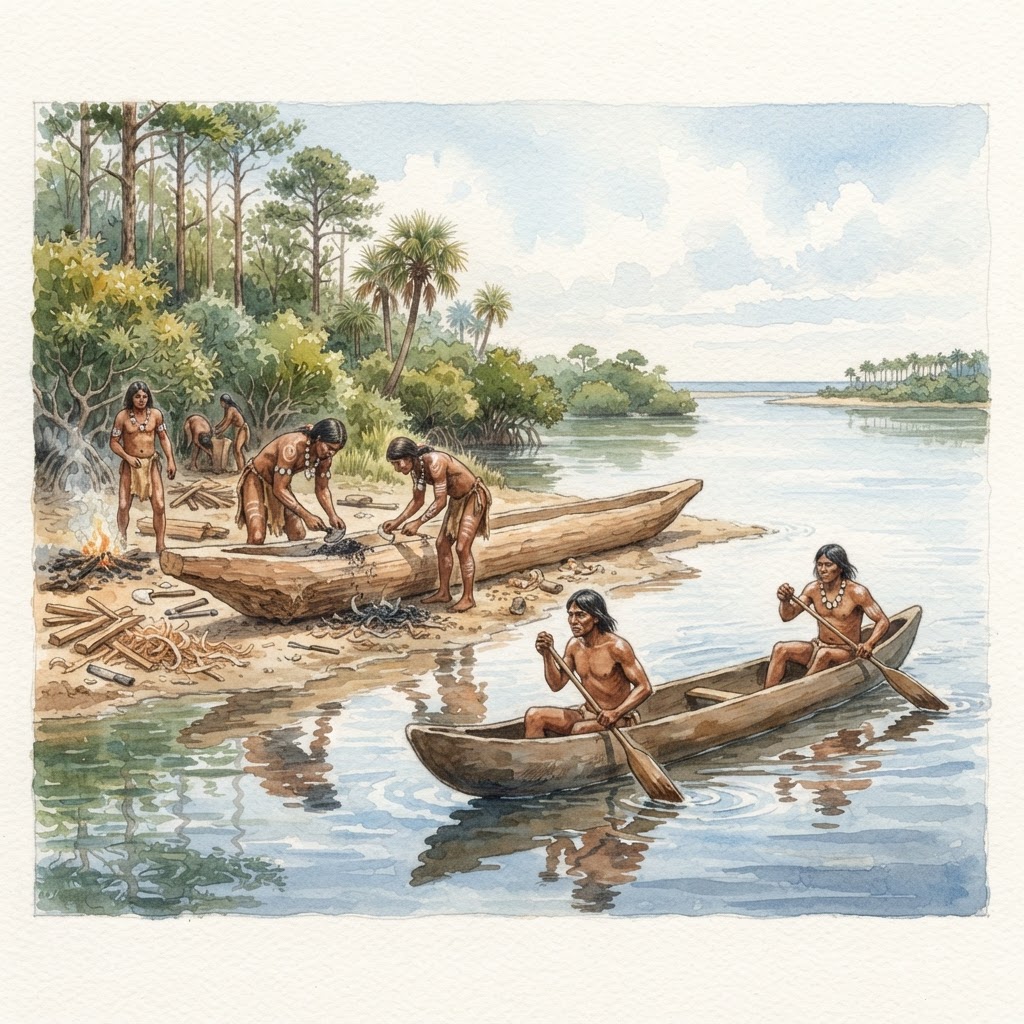
Before there were roads or bridges on Florida's east coast, the Indian River Lagoon WAS the highway. The Ais people, who lived along the lagoon for thousands of years before European contact, traveled primarily by canoe. Their canoes were dugouts — carved from a single cypress log, using fire and shell tools to hollow out the trunk. A large dugout could carry several people and a significant cargo. The Ais paddled their canoes from camp to camp along the lagoon's shoreline, between fishing grounds, shellfish beds, and seasonal camps. The lagoon was their highway, their fishing ground, their source of food, and their connection to other communities. When the first European explorers arrived, they too traveled the lagoon by canoe and small boat — there was no other way. The lagoon's role as a highway would continue for centuries. The transition from Ais canoes to settlers' skiffs to steamboats to bridges is the story of how people crossed the lagoon — and how each technology changed the life of the coast.