"A conservation mission isn't something you have to travel far or be a professional scientist to do. Every time you report a derelict trap, pick up debris from a shoreline, photograph an invasive species, or submit a water quality observation — that's a conservation mission. Real actions, taken by regular people, that have a direct measurable impact on Florida's waterways and wildlife. Let me show you exactly how this works."
What Are Conservation Missions?
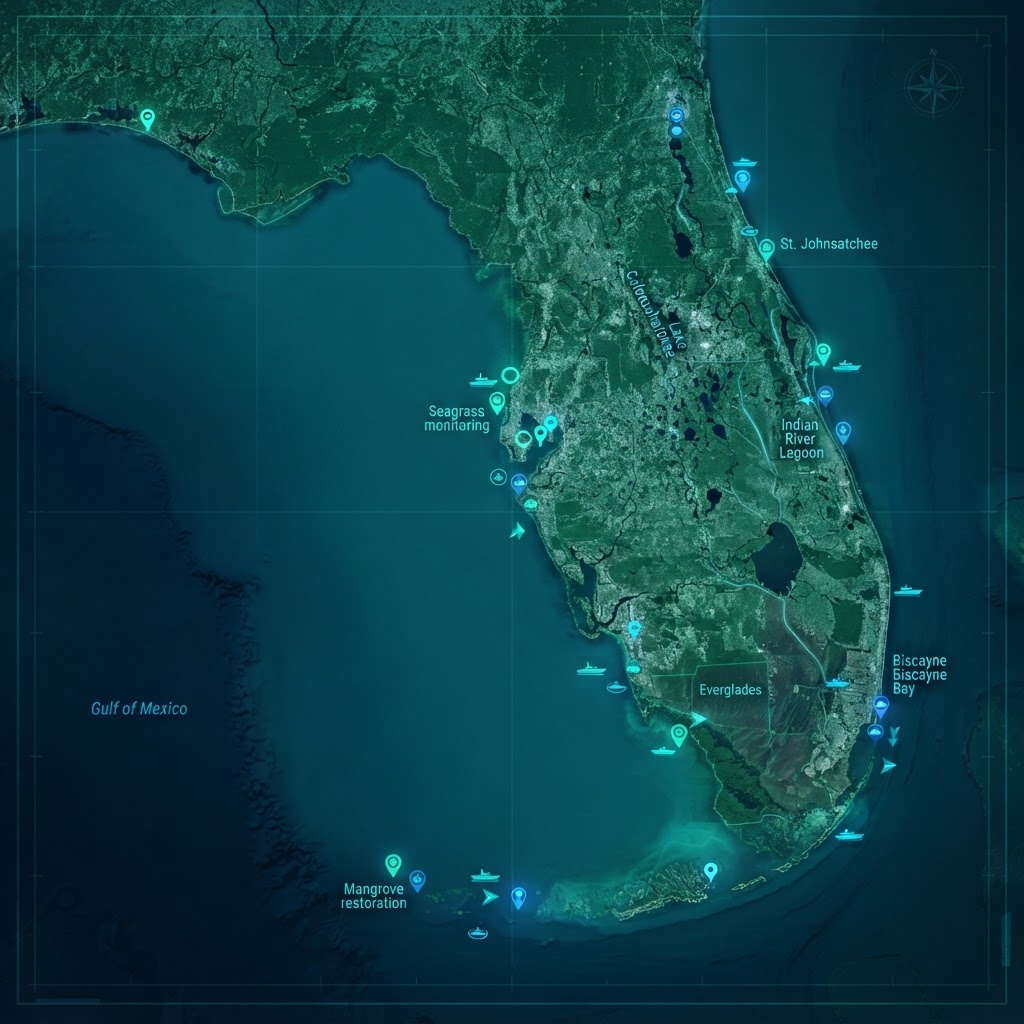
A conservation mission is a structured, goal-oriented action that directly contributes to the protection, monitoring, or restoration of a natural resource. Unlike general environmental awareness, missions have a clear objective, a defined method, and a measurable outcome. In Florida, conservation missions happen every single day: volunteers report derelict crab traps that FWC crews then recover; citizen scientists document manatee sightings that inform boat speed zones; shoreline cleanup teams remove hundreds of pounds of fishing line and debris from nesting beaches; water quality monitors alert agencies to dangerous dissolved oxygen crashes before fish kills occur. The key insight is that individual actions aggregate into collective impact. One person removing three pieces of fishing line from a mangrove is a small act. Ten thousand people each removing three pieces is 30,000 fewer entanglement hazards in Florida's waterways. Conservation missions channel individual effort into coordinated, data-backed environmental protection.