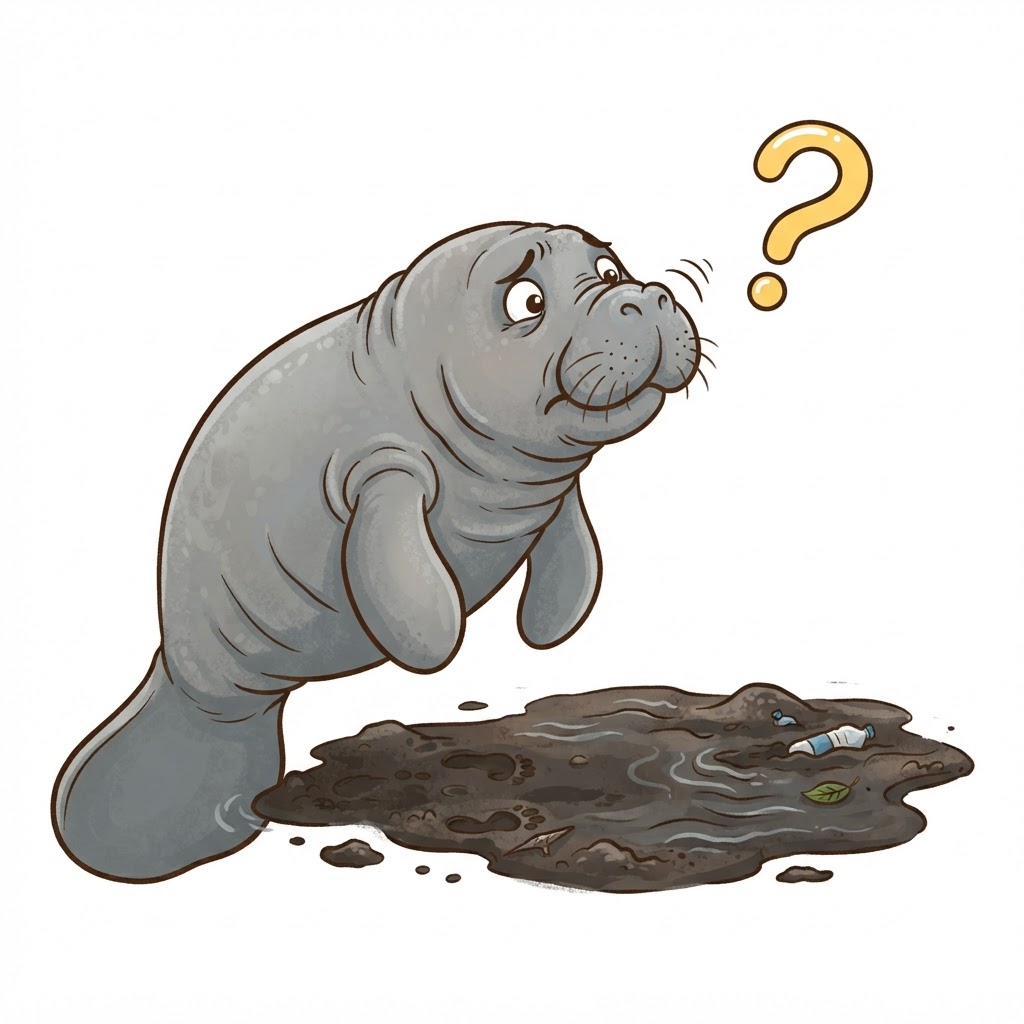
"Nitrogen gets the headlines, but sulfur is the silent killer in estuarine sediments. When oxygen runs out, sulfur takes over — and the result smells like rotten eggs and poisons seagrass."
Sulfur: The Overlooked Estuarine Element
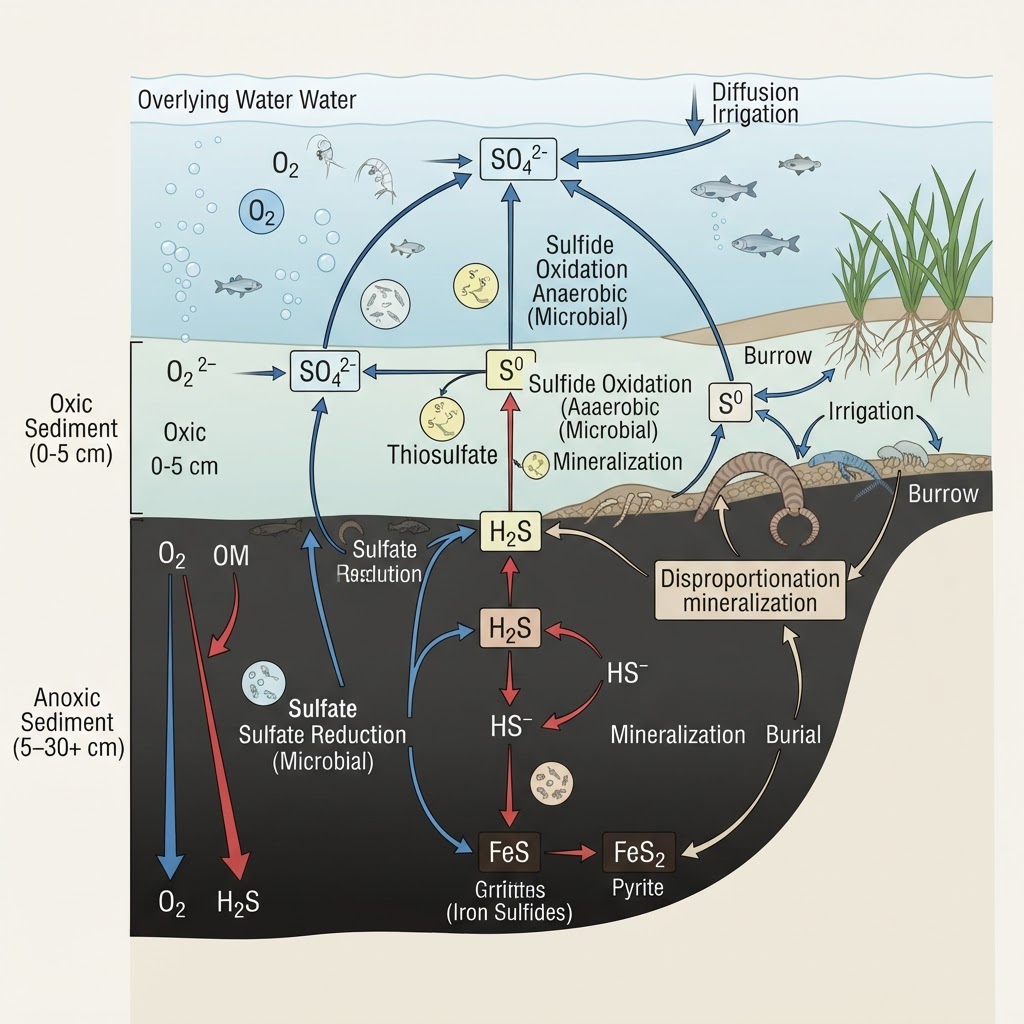
Sulfur is the often-ignored third element of estuarine biogeochemistry, after carbon and nitrogen, and it becomes dominant exactly when estuaries are most stressed. In oxygenated seawater, sulfate (SO4²⁻) is abundant and harmless. But when sediment oxygen is depleted, sulfate-reducing bacteria take over anaerobic decomposition, producing hydrogen sulfide (H2S) — the rotten-egg gas. Sulfide is toxic to roots, invertebrates, and fish, and its accumulation is a hallmark of degraded, eutrophic sediments. The lagoon's organic-rich muck, warm temperatures, and stratified summer conditions make sulfur cycling a central driver of sediment health and a frequent trigger of seagrass die-offs. Understanding sulfur biogeochemistry is therefore essential to diagnosing why the lagoon's habitats fail and how to restore healthy, oxygenated sediments that keep sulfur in its benign sulfate form.