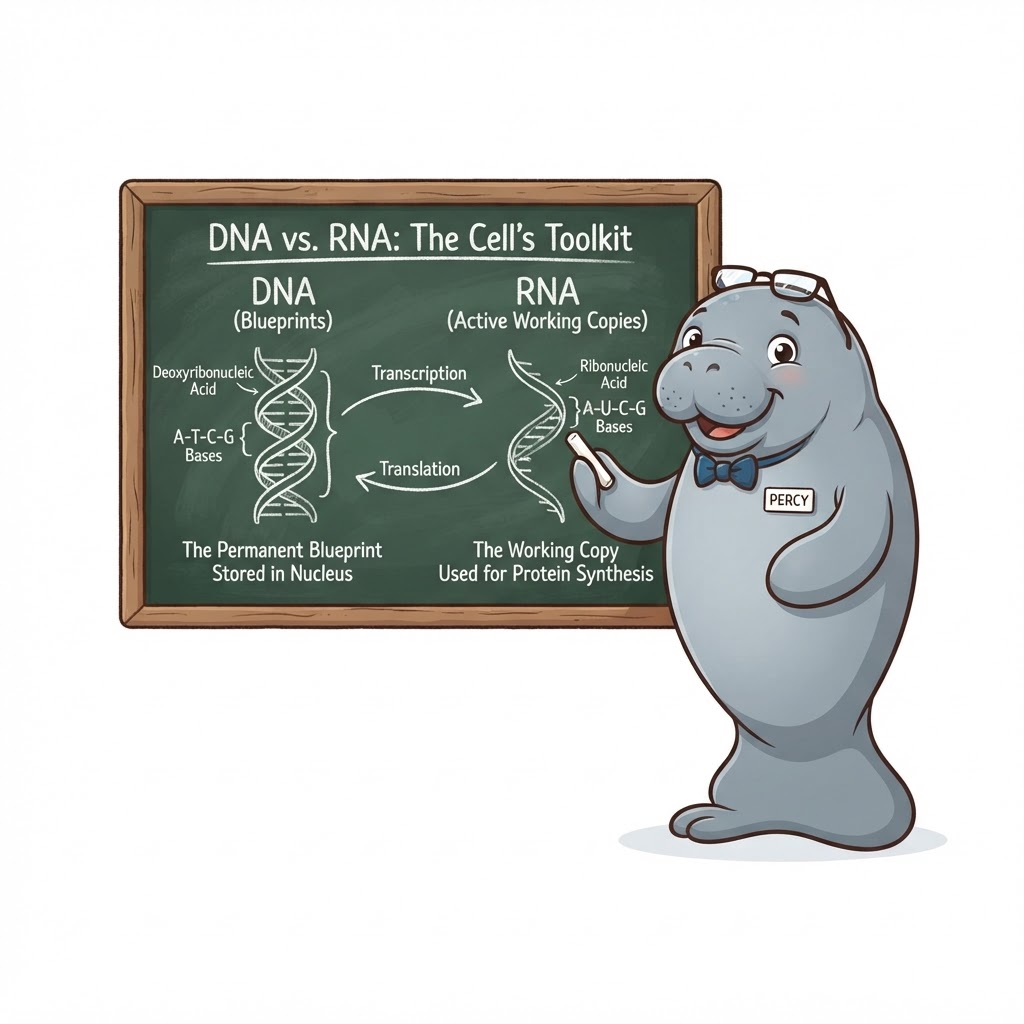
"DNA is the blueprint — it shows who could be there. RNA is the working copy — it shows what an organism is actually doing right now. For lagoon health, the activity matters more than the potential."
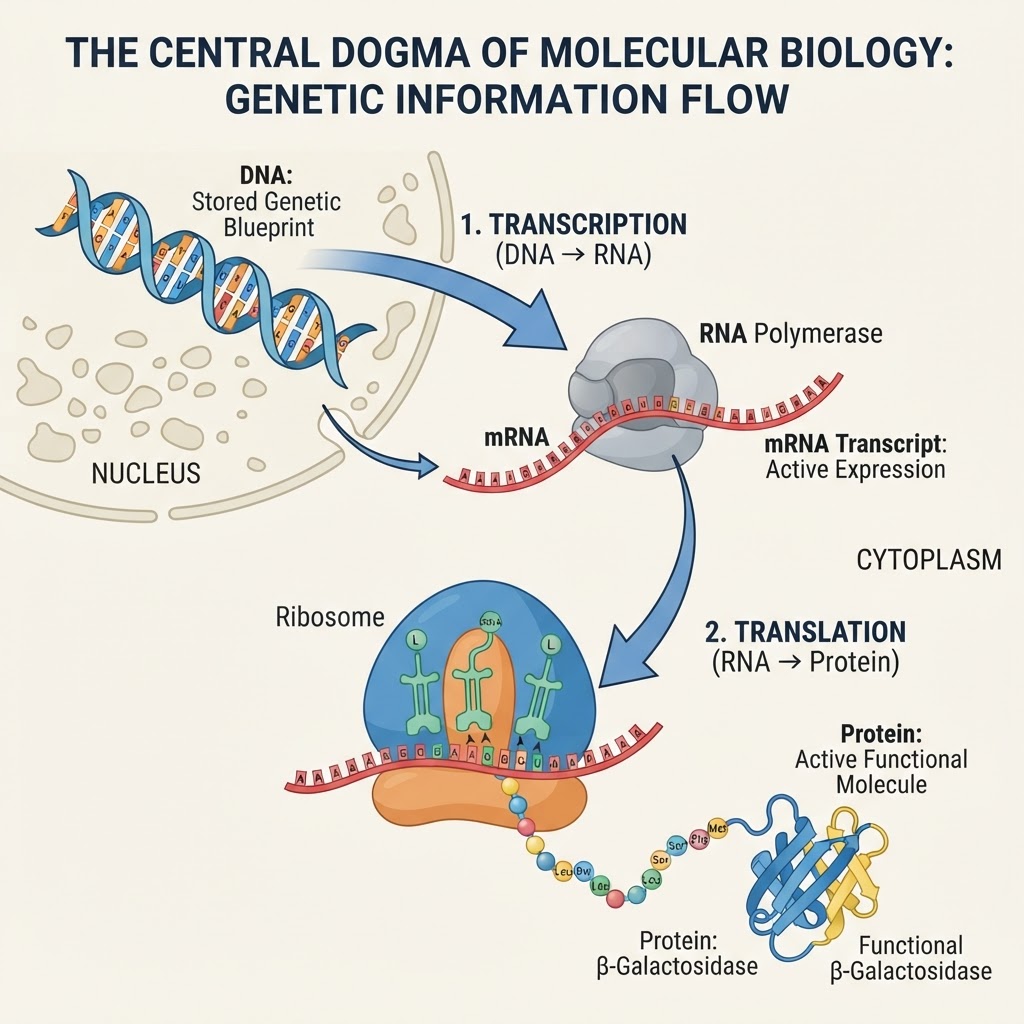
From DNA to RNA: What's Active Now
The central dogma of molecular biology distinguishes the stored blueprint (DNA) from its active expression (RNA → protein). DNA tells you what an organism could do; RNA tells you what it is doing at the moment of sampling. This distinction is the foundation of environmental RNA (eRNA). In a lagoon context, DNA-based methods (eDNA, amplicons) reveal presence and potential, but a species can be present and dormant, or present but stressed and not functioning. RNA — specifically messenger RNA, the transient transcripts of genes being expressed — captures the active physiological state: which genes a community is actually using. As RNA degrades faster than DNA, detecting it in an environmental sample indicates recent, active biology rather than relic or dormant material. For diagnosing lagoon health, the activity dimension RNA adds is decisive: a stressed community expresses stress-response genes long before biomass or chemistry change, making eRNA a leading indicator of ecosystem condition.