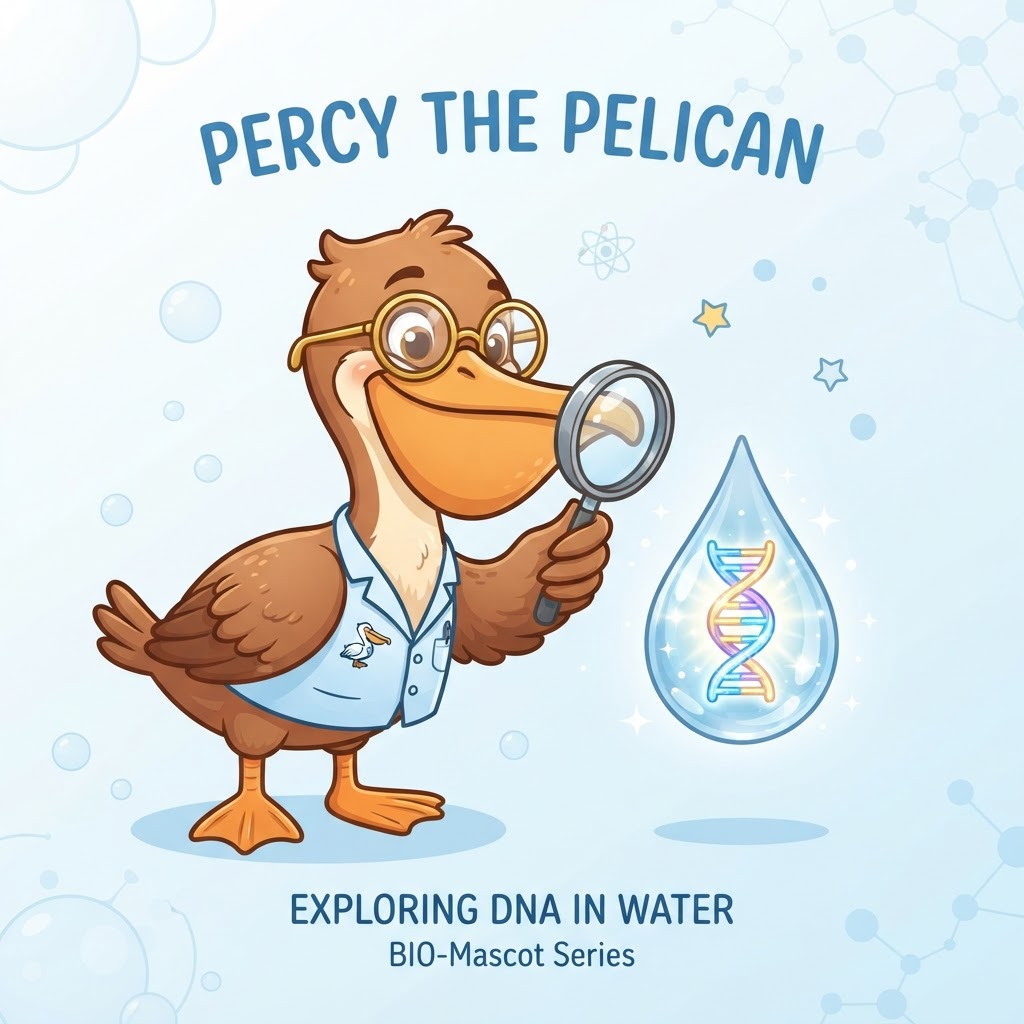
"Every fish that swims leaves a little of itself behind — skin cells, mucus, waste. That shed DNA floating in the water is environmental DNA, and we can read it."
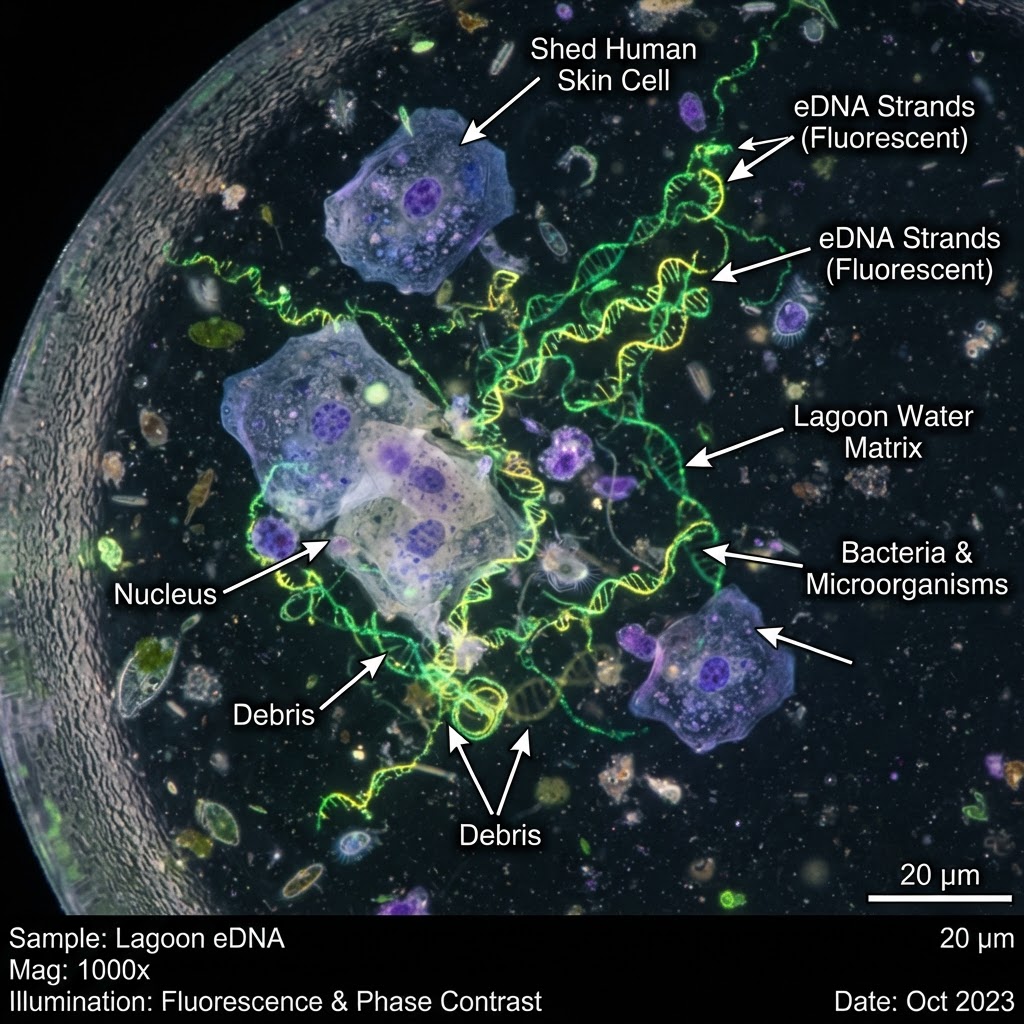
What Is Environmental DNA?
Environmental DNA (eDNA) is genetic material organisms shed into their environment — via skin cells, mucus, feces, gametes, and decomposition. In water, this DNA persists for hours to days before degrading (UV, microbes, pH). By filtering a water sample and sequencing the captured DNA, we can detect which species were present without ever capturing or seeing them. Two broad approaches: (1) single-species (targeted) assays using quantitative PCR (qPCR) to detect one species of interest; (2) multi-species (metabarcoding) using high-throughput sequencing to survey whole communities from a single sample. eDNA has become a core tool in modern biodiversity monitoring and is increasingly accepted in regulatory contexts.