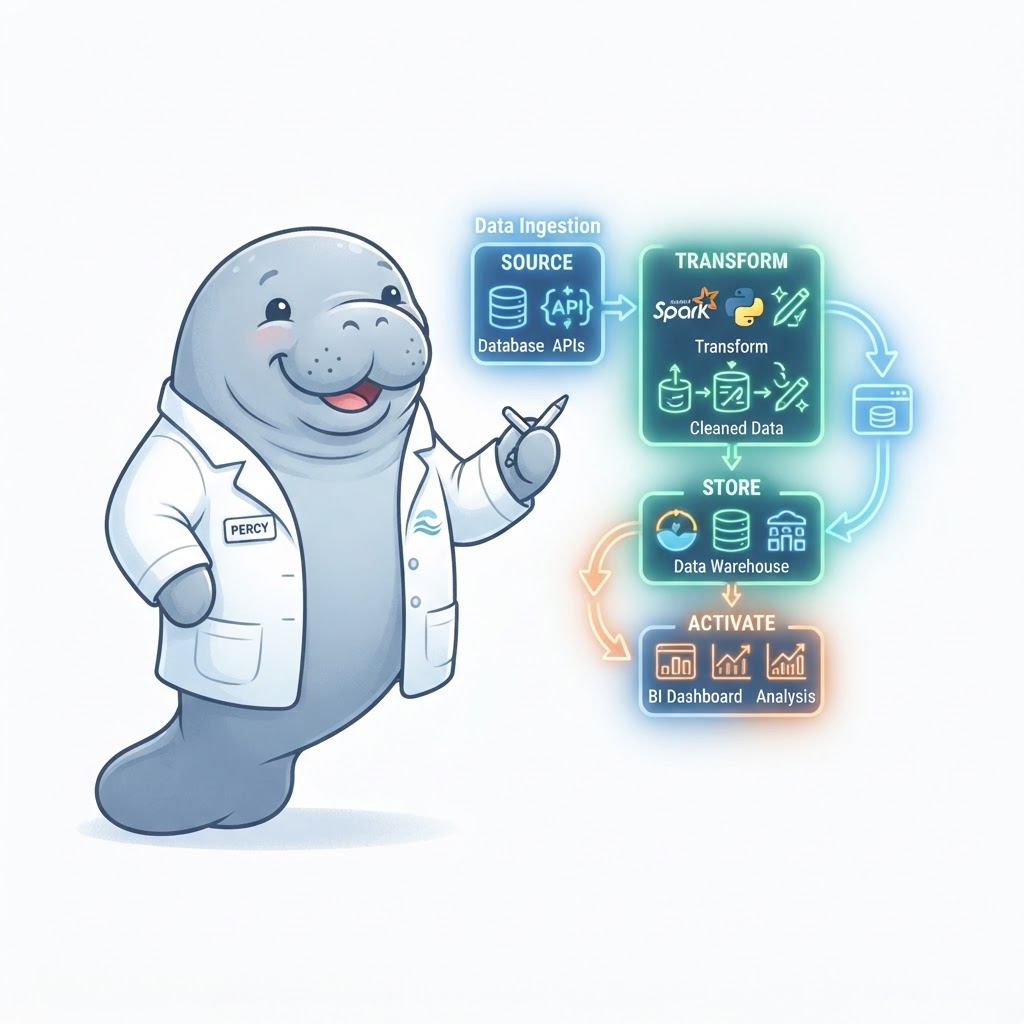
"A spreadsheet of numbers is not knowledge. Turning data into a defensible insight takes a pipeline — collect, clean, analyze, model, communicate — and every link has to be reproducible."
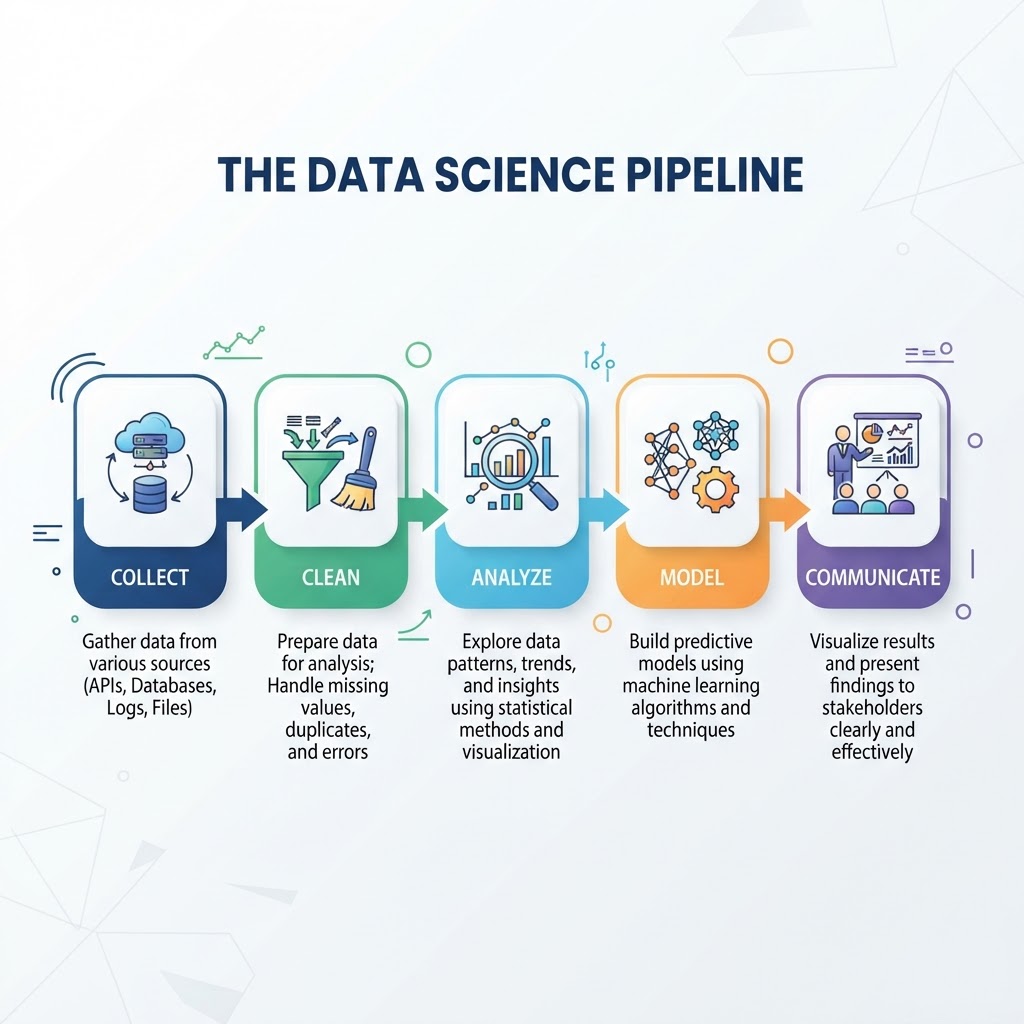
From Data to Insight: The Analytics Pipeline
Environmental data science is a pipeline: acquisition (sensor networks, field sampling, remote sensing), cleaning and QA/QC, exploratory analysis, statistical or mechanistic modeling, and communication to decision-makers. Each stage introduces assumptions and uncertainty that must be carried forward transparently. The modern standard is reproducibility: data, code, and methods are version-controlled and re-runnable, so a result can be regenerated from inputs (R/Python + Git, literate notebooks, containerized environments). Open science norms — public data, documented code, archived workflows — mean a lagoon trend claim can be independently checked. Without a reproducible pipeline, a finding is an opinion; with one, it is evidence.