
"Chlorophyll tells you how much algae is out there. Growth rate tells you how fast it's multiplying. A bloom isn't just a lot of algae — it's algae growing fast, and the rate is what predicts the crash."
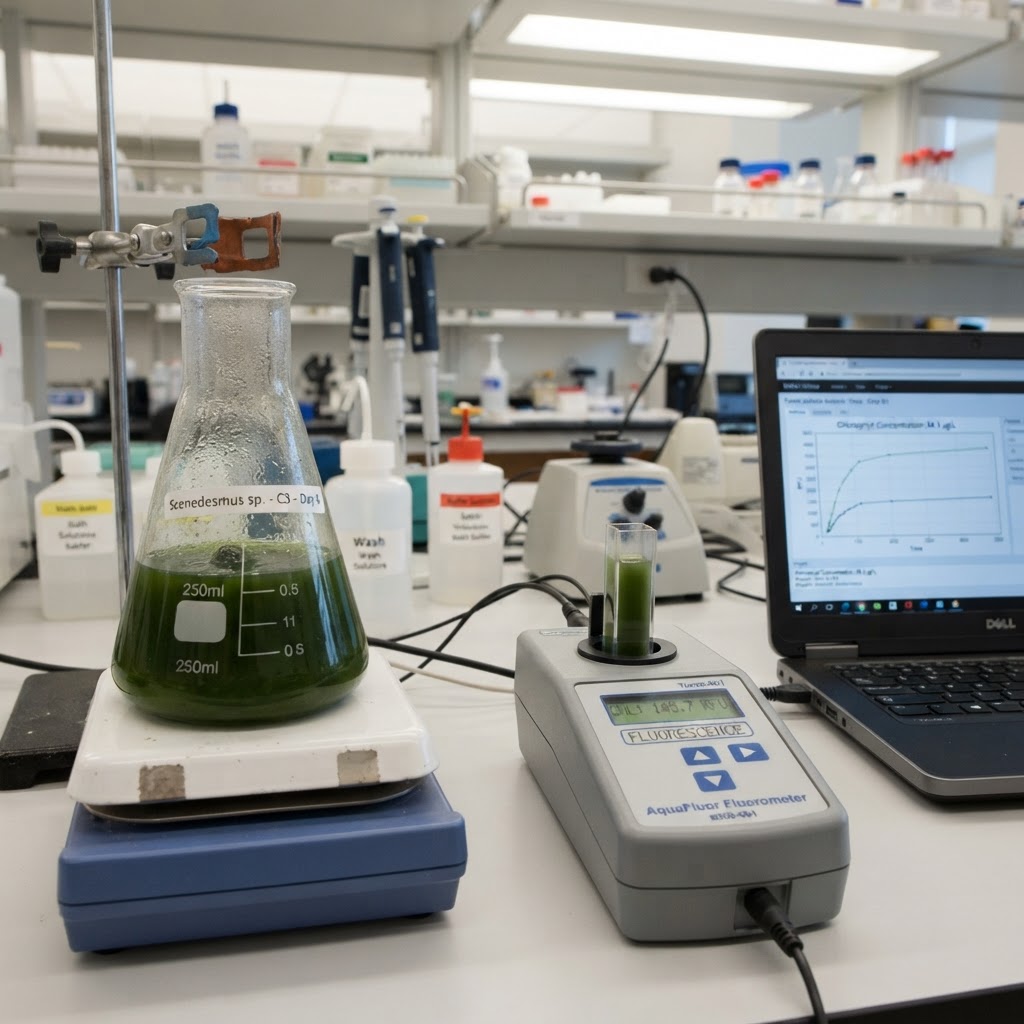
Growth Rates: The Pulse of the Bloom
Standing biomass (chlorophyll-a) measures how much algae is present; the specific growth rate measures how fast the population is increasing — the fundamental physiological quantity. Two watersheds with identical chlorophyll can have very different trajectories: one with a slow-growing but low-grazed community is stable, while one with a high growth rate is a bloom about to explode. Growth rate integrates the effects of light, temperature, nutrients, and grazing into a single number (divisions per day), and it is what determines whether biomass will rise, fall, or stay constant. The Institute measures growth rates directly because they reveal the mechanism behind a bloom: a chlorophyll spike driven by high growth is a nutrient problem; one driven by low grazing loss is a food-web problem. The same biomass, different cause, different management response — and only the growth rate distinguishes them.