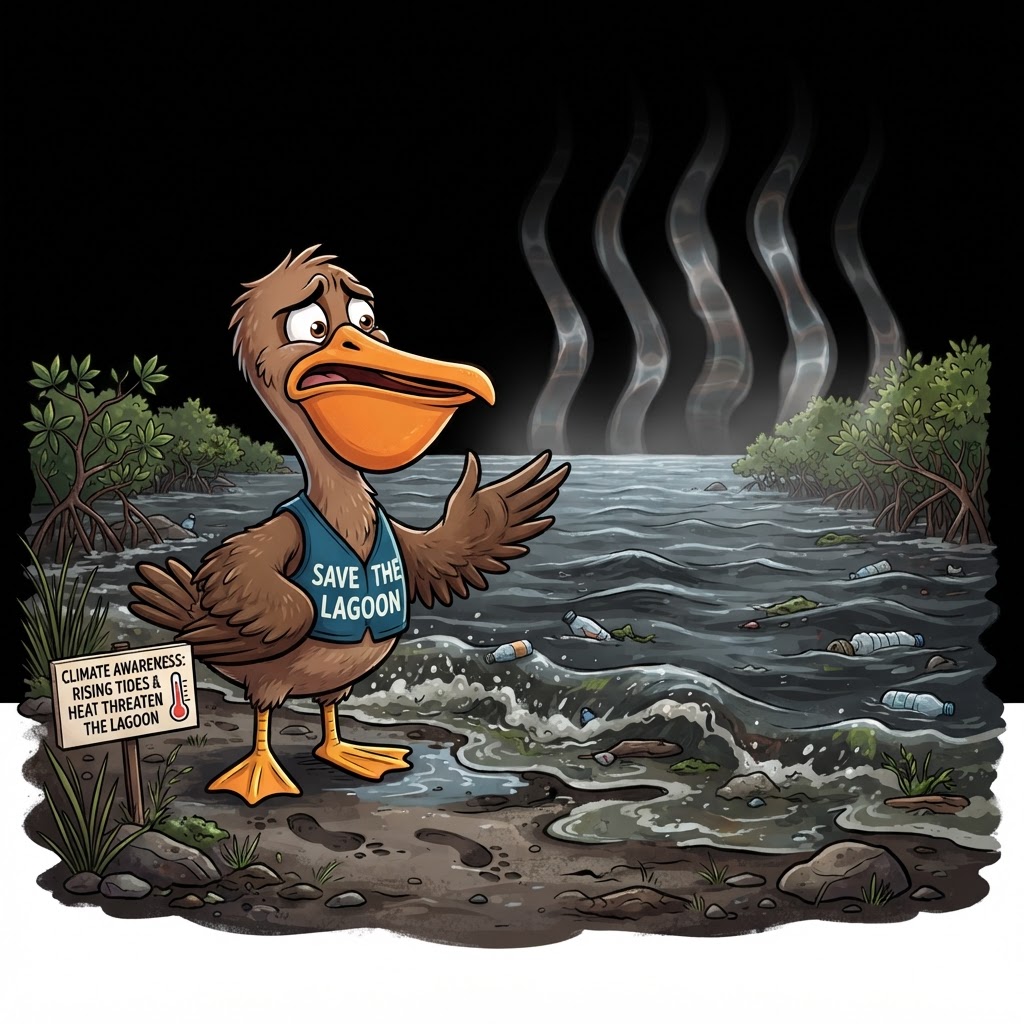
"I've been flying over the Indian River Lagoon my whole life — and I can tell you, things have changed. The water is warmer. The algae blooms are bigger and more frequent. The seagrass beds I used to fish over have shrunk dramatically. Climate change isn't something happening far away — it's happening right here in our lagoon, right now. Let me show you what I've seen."
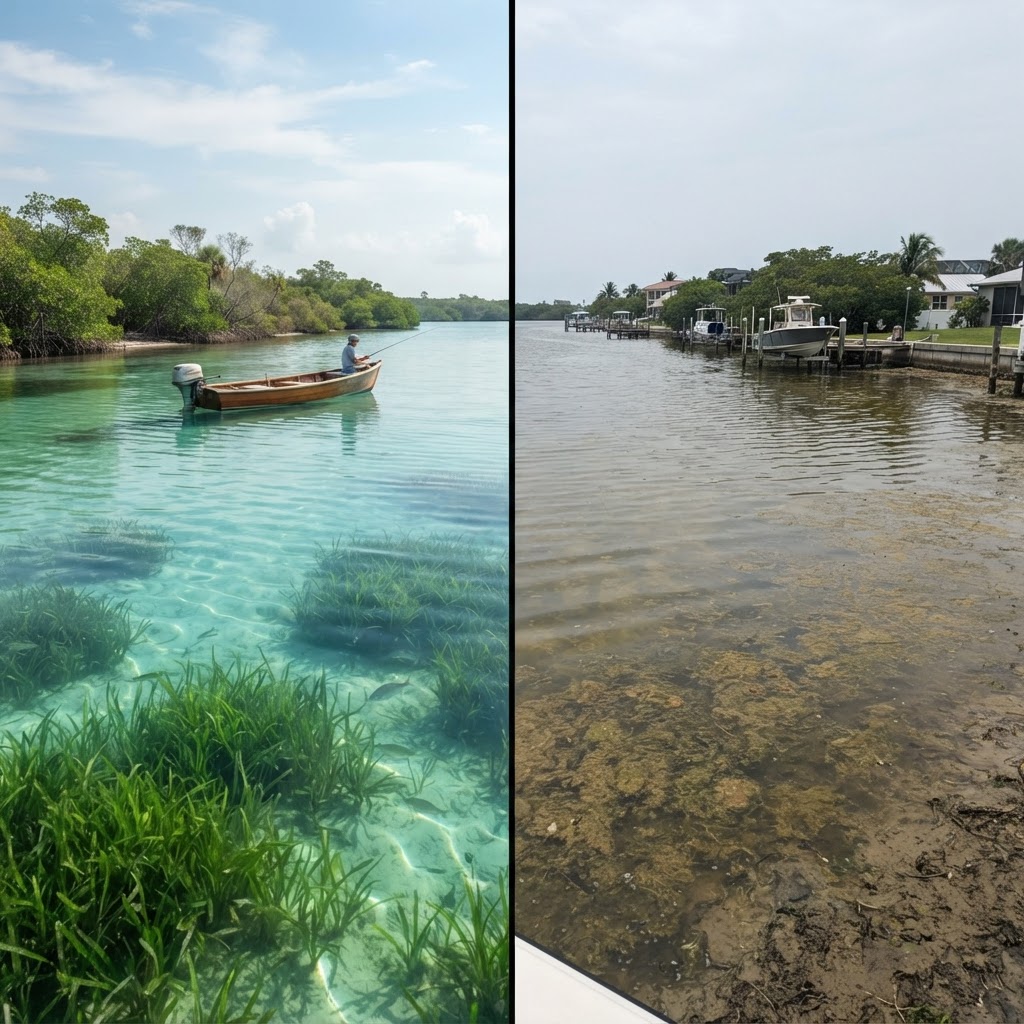
Climate Change & Florida's Waters — Why It Matters Here
Florida sits at the frontline of climate change in the United States. As a low-lying coastal state with extensive estuaries, wetlands, and coral reefs, Florida is uniquely vulnerable to the effects of a warming planet. The Indian River Lagoon has already experienced measurable changes: water temperatures have risen over 2°F in the past 50 years; harmful algal blooms (HABs) have grown larger and more frequent; seagrass coverage has collapsed by over 70% since the 1940s; sea levels along Florida's coasts are rising at 1–3 inches per decade — faster than the global average due to land subsidence and ocean current changes. Understanding climate change isn't just a global issue — it's about protecting the lagoon, the wildlife, and the communities we all depend on.