"If you've ever eaten a crab cake or a crab cake sandwich in Florida, you've probably eaten a blue crab from right here on the lagoon. The blue crab is one of the most important animals in the Indian River Lagoon — it's been a food source here since the Ais people, and a commercial fishery for over a hundred years."
The Lagoon's Famous Blue Crab
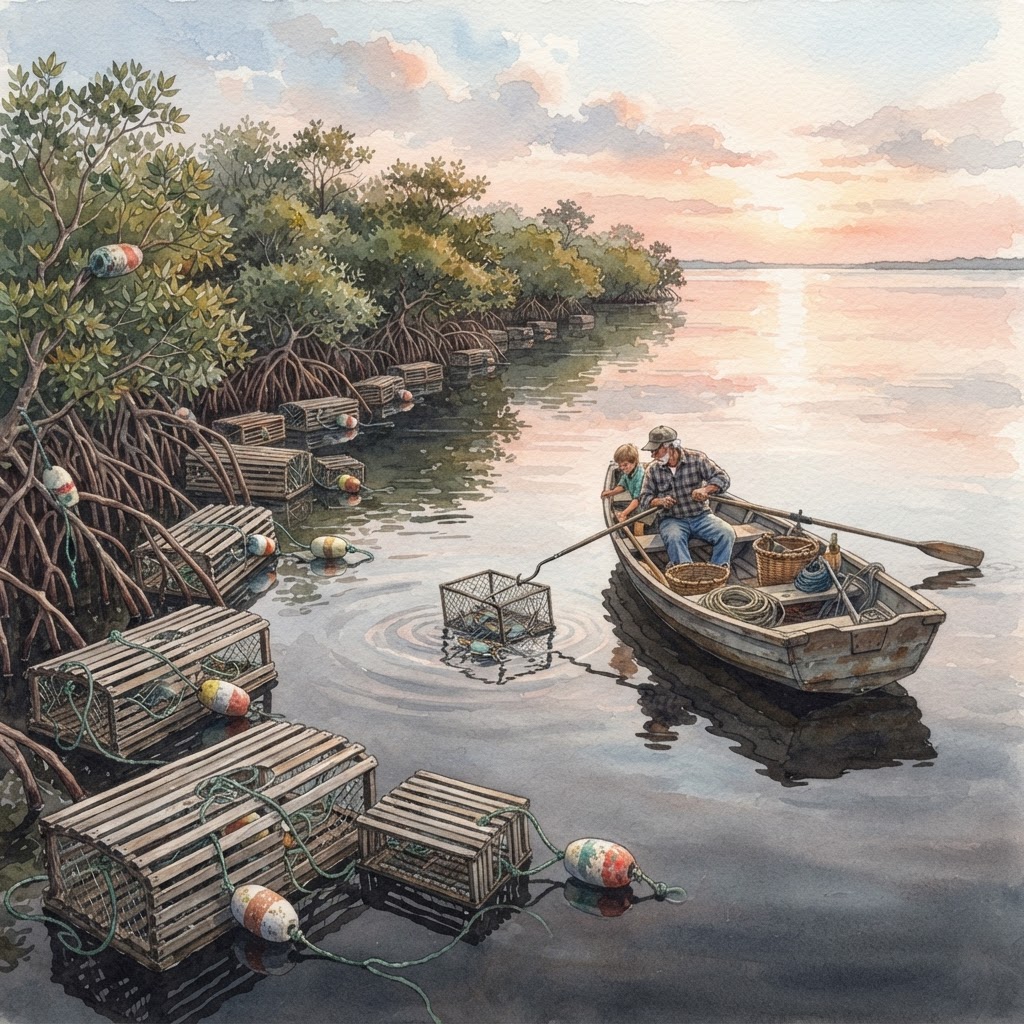
The blue crab (Callinectes sapidus — 'beautiful savory swimmer') is one of the most iconic and economically important species of the Indian River Lagoon. Blue crabs are found along the entire Atlantic and Gulf coasts, but the Indian River Lagoon is one of Florida's most productive blue crab habitats. The lagoon's mix of seagrass beds, mangrove shorelines, and brackish water creates ideal crab habitat. The Ais people harvested blue crabs for thousands of years; shell middens along the lagoon contain crab remains. When American settlers arrived, blue crab harvesting became a commercial fishery. By the early 1900s, crab houses along the lagoon were shipping hard crabs, soft-shell crabs, and crab meat to markets throughout the eastern United States. The blue crab fishery has been a continuous lagoon industry for over a century — one of the few commercial fisheries still active on the lagoon today.