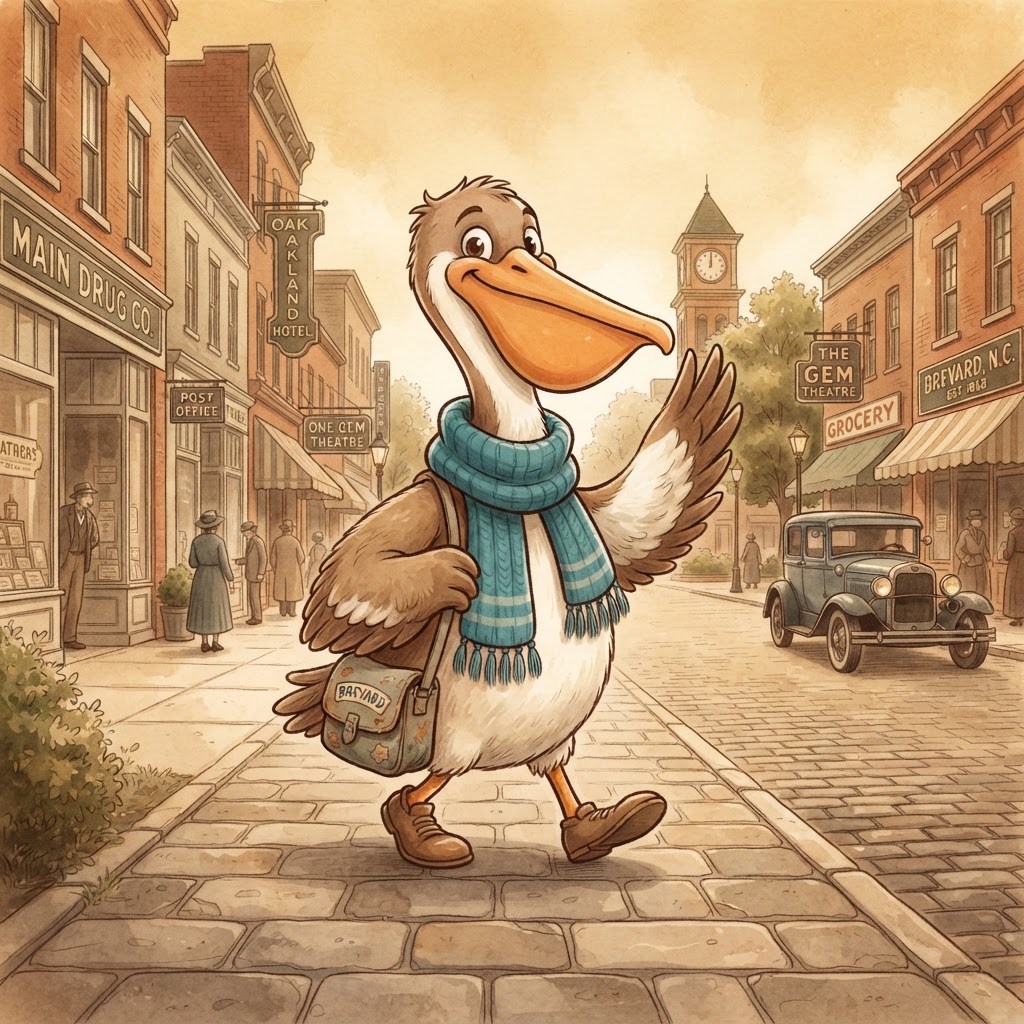
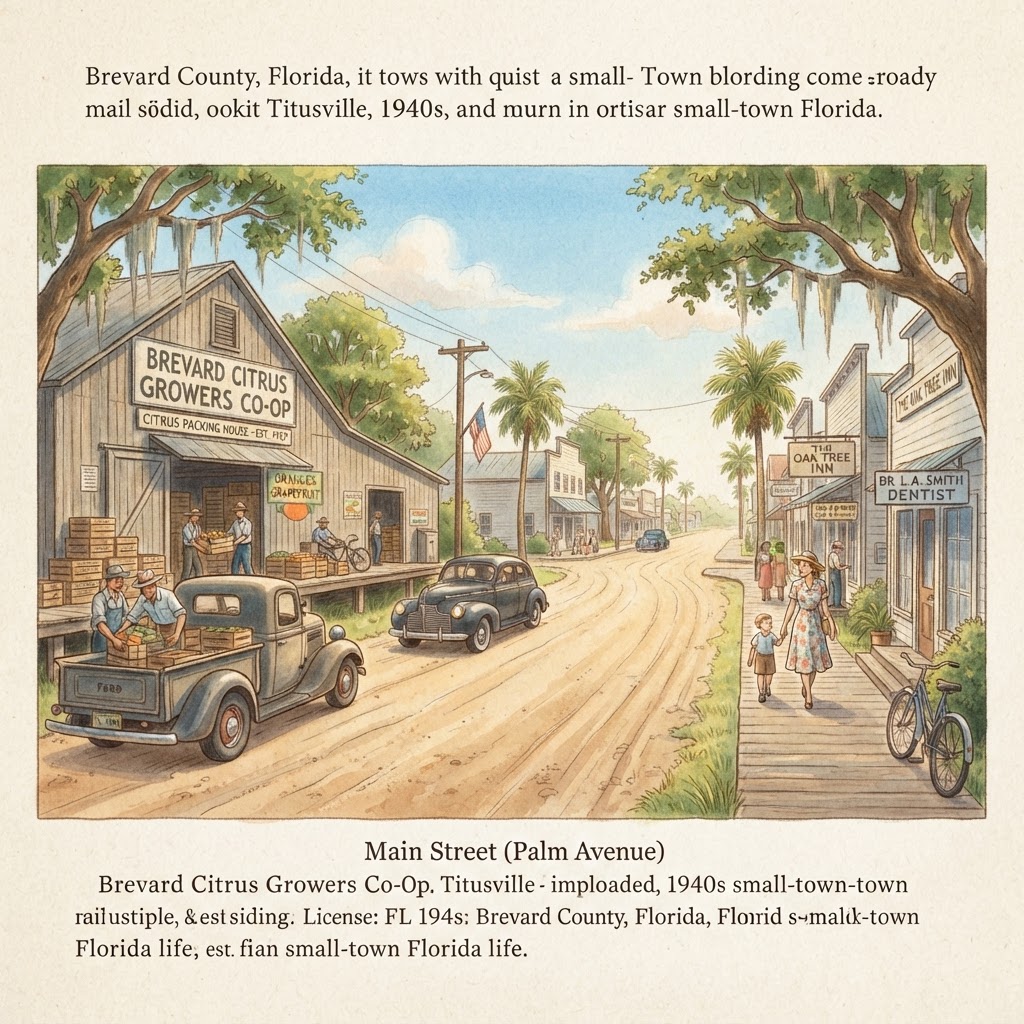
"Before NASA, before the rockets, Brevard was a quiet, rural place. Small towns, citrus groves, cattle, and fishing — that was the lagoon corridor. In the 1940s and early '50s, you could stand on a Titusville dock and see... almost nothing. A few boats, a packing house, a slow life. This was the Brevard the Space Age would transform."
Brevard Before NASA
Brevard County before the Space Race: Before NASA and the space program transformed it in the late 1950s, Brevard County was a quiet, rural place. What Brevard was like in the 1940s and early 1950s: Small population — the county's population was a fraction of what it would become. The towns along the lagoon (Titusville, Cocoa, Rockledge, Eau Gallie, Melbourne) were small, quiet communities. Rural character — most of the county was open land: citrus groves, cattle pastures, pine flatwoods, and scrub. The barrier islands were mostly undeveloped — a few small beach communities and a lot of wild land. Slow pace — life ran at a small-town, rural pace. People knew each other, businesses were local, and the lagoon was the center of life. Limited access — before the modern causeways and I-95, getting around Brevard was slower. The old narrow bridges and U.S. 1 along the lagoon were the main routes. The economy — citrus, cattle, fishing, and a little tourism were the mainstays. There were packing houses, fish houses, and small businesses. The Space Coast didn't exist yet — Cape Canaveral was just a cape, not a launch site. This quiet, rural Brevard — the 'old Florida' of the lagoon — would be utterly transformed by the arrival of the space program in the late 1950s. The transformation would bring tens of thousands of people, new roads, new towns, and a whole new identity. But before all that, there was this: a quiet place on a quiet lagoon.